HERE WE GO: Iran Just Responded Back — And the Message to Trump Is Getting Tougher
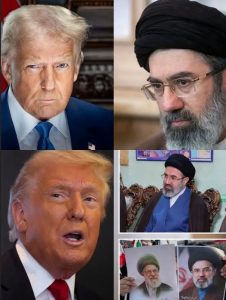
A dramatic image of Donald Trump alongside senior Iranian figures is circulating with the headline “HERE WE GO: Iran just responded back.” The timing is significant because Washington and Tehran are once again locked in a tense confrontation over the Strait of Hormuz, sanctions, military pressure and the possibility of negotiations.
But what exactly did Iran respond to?
The latest exchange is not simply a new military threat or an announcement of immediate escalation. Instead, Iran has delivered a forceful political and diplomatic response to Trump’s latest comments, while continuing to insist that the Strait of Hormuz will not fully reopen unless Washington meets a list of Iranian demands.
The developments are unfolding rapidly, and the situation remains fluid.
Iran’s Latest Message
On August 10, 2026, Iranian Foreign Ministry spokesman Esmaeil Baghaei responded to Trump’s recent description of the negotiations as something resembling a “chess game.”
Trump had said that the United States was “low-keying” its approach to Iran and was only “semi-negotiating” while watching Iran’s economic difficulties. He compared the situation to a chess match.
Iran’s response was pointed.
Baghaei said that Iranians had demonstrated that they were “professional chess players.” He also emphasized that the conditions for reopening the Strait of Hormuz had not yet been met. (The Times of Israel)
The wording is important because Tehran is signaling that it does not see itself as a passive participant waiting for Washington to dictate the terms.
Iran believes it still possesses significant leverage.
And that leverage is centered largely on Hormuz.
Why Hormuz Is at the Center of Everything
The Strait of Hormuz is one of the world’s most strategically important waterways.
Before the current conflict, approximately one-fifth of globally traded oil and a significant share of liquefied natural gas moved through the strait. Its disruption therefore has consequences far beyond Iran and the United States. (Reuters)
For Iran, controlling or restricting passage through the waterway gives Tehran a powerful bargaining chip.
For Washington, allowing Iran to exercise long-term control over such a critical international shipping route would be strategically unacceptable.
That is why the dispute has become much larger than a disagreement over a single waterway.
It is now about who has leverage, who makes concessions first and what the eventual security arrangement in the Persian Gulf will look like.
Iran Says the Strait Will Not Simply Reopen
Perhaps the most important development is that Iran has explicitly rejected the idea that progress with Oman automatically means the Strait of Hormuz will return to normal.
Iran and Oman have been negotiating arrangements for navigation through the waterway.
Those discussions have reportedly made progress.
Reuters reported that Tehran and Muscat were nearing an agreement involving new shipping lanes and mechanisms for safe navigation, environmental protection, maritime services and combating maritime crime. (Reuters)
That sounds encouraging.
But Iran is making an important distinction.
An agreement over a shipping route is not necessarily the same thing as reopening the Strait of Hormuz completely.
Iran says a full reopening depends on what happens between Tehran and Washington.
That distinction could become one of the central issues in the next stage of negotiations.
What Does Iran Want?
Iran has presented an extensive list of demands.
According to Reuters and the Associated Press, Tehran wants Washington to end its naval blockade, lift sanctions, release frozen Iranian assets and provide compensation for damage caused by the war. Iran has also demanded an end to further American military threats and a halt to what it describes as aggression against Iran and allied groups in the region. (AP News)
Those are substantial demands.
Some are clearly designed as negotiating positions rather than concessions Iran expects Washington to accept immediately.
Nevertheless, Tehran is putting them on the table.
The message is essentially this:
If Washington wants the strategic situation around Hormuz changed, Iran expects something in return.
That is a very different posture from simply agreeing to reopen the waterway in exchange for vague promises.
Trump’s Strategy: Pressure and Patience
Trump’s latest comments suggest that Washington believes economic pressure can weaken Iran’s negotiating position.
Trump told Axios that the United States was watching Iran’s inflation and financial difficulties and suggested that the country’s economic problems could eventually influence Tehran’s calculations. He described the process as a chess game. (Reuters)
That approach reflects a familiar Trump negotiating philosophy.
Rather than immediately announcing a final agreement, Trump is signaling that Washington can wait and allow pressure to build.
Iran, however, is attempting to demonstrate that it can wait too.
That creates a classic diplomatic standoff.
Each side believes time can work in its favor.
The Economic Battle
The economic consequences of the crisis are enormous.
Iran is under severe pressure from sanctions and the disruption of its oil exports.
But the United States and other countries also face economic consequences from the prolonged disruption of Hormuz.
Oil prices have risen, and concerns about inflation have intensified.
The Associated Press noted that the closure of the waterway has become one of the conflict’s most significant economic consequences, particularly because the strait normally carries roughly one-fifth of the world’s traded oil. (AP News)
That creates an unusual situation.
Iran is economically weakened, but it retains a geographical advantage.
The United States has enormous military and financial power, but it also has an interest in restoring stable energy flows.
Neither side therefore possesses unlimited leverage.
The Latest Shipping Incident Raises the Stakes
The situation became even more tense after an Iranian missile strike hit a tanker belonging to the Abu Dhabi National Oil Company while it was transiting the Strait of Hormuz.
The vessel caught fire, although no deaths were reported.
The attack occurred while Oman was trying to facilitate negotiations concerning navigation through the waterway. Omani officials condemned the strike while insisting that negotiations were continuing. (CBS News)
That incident demonstrates how fragile the diplomatic process remains.
Even while negotiations are underway, events at sea can rapidly change the atmosphere.
One serious incident involving a commercial vessel could trigger another escalation.
Iran’s New Security Appointment
Another important development occurred inside Iran.
Tehran appointed Mohsen Rezaei, a former commander of the Islamic Revolutionary Guard Corps, to head the powerful Supreme National Security Council.
Rezaei replaced Mohammad Bagher Zolghadr.
The significance of the appointment remains uncertain, but it is notable because Rezaei is an experienced military figure and has previously taken hard-line positions toward the United States. (AP News)
The personnel change could signal continuity, a harder negotiating position, or simply an internal restructuring.
It is too early to know.
But in the context of the current confrontation, every senior appointment in Tehran is being watched closely.
A Message of Unity Inside Iran
At the same time, Iranian President Masoud Pezeshkian has emphasized unity.
According to the Associated Press, Pezeshkian recently described a lengthy meeting with Iran’s new Supreme Leader, Mojtaba Khamenei. He said the meeting focused on economic conditions, people’s livelihoods, employment and the effects of American sanctions.
Most importantly, Pezeshkian said the supreme leader emphasized the need for “unity and cohesion.” (AP News)
That message matters because prolonged war and sanctions can create political divisions inside any government.
Iranian leadership appears determined to present a united front.
At the same time, outside observers are watching for disagreements over whether Tehran should continue confrontation or seek a negotiated settlement.
The Trump-Iran Chess Match
This is where Trump’s chess metaphor becomes particularly interesting.
Trump says he is watching Iran’s economic condition.
Iran says it is capable of playing the game too.
Neither side wants to appear desperate.
For Trump, making concessions too quickly could be interpreted by opponents as weakness.
For Iran, reopening Hormuz without receiving meaningful concessions could similarly be portrayed domestically as surrender.
That is why both governments are emphasizing strength.
Diplomatic negotiations often involve exactly this kind of public positioning.
The statements made for television audiences may be as important politically as the negotiations happening behind closed doors.
What Happens Next?
There are several possible paths forward.
The most optimistic scenario would involve Oman helping Iran and the United States establish a framework for safe shipping, followed by broader negotiations over sanctions, the blockade and other disputes.
A second possibility is a limited shipping arrangement that allows some vessels to transit while the broader political confrontation continues.
A third possibility is further escalation if negotiations collapse.
That could mean additional attacks on shipping, new American military measures, or renewed pressure on Iran’s infrastructure.
The most dangerous scenario would be an incident involving American or Iranian forces that neither government initially intended to escalate but that nevertheless triggers retaliation.
That is why the current diplomatic efforts matter so much.
What the Viral Headline Gets Right—and Wrong
The headline “Iran just responded back” captures one real aspect of the situation: Tehran has responded directly to Trump’s latest rhetoric.
But the response isn’t necessarily an announcement that Iran has launched a new major attack.
Instead, Iran has reinforced its negotiating position.
It is telling Washington that Tehran believes it has leverage and will not simply surrender that leverage.
Iran’s message is also directed at the international community.
The government wants other countries to understand that the future of Hormuz is tied, in its view, to the broader conflict and to U.S. actions against Iran.
That makes the issue much bigger than a bilateral argument.
The Stakes for the World
The Strait of Hormuz is not merely a line on a map.
It is a critical artery for the global economy.
If shipping remains severely restricted, the consequences can reach consumers thousands of miles away through higher fuel prices, transportation costs and inflation.
Manufacturers can face higher energy bills.
Airlines can face higher fuel expenses.
Truckers can pay more for diesel.
Households can eventually feel the impact at gas stations and in the prices of goods transported by road, sea and air.
That is why governments around the world are watching the negotiations.
The Bottom Line
Iran’s latest response should not be viewed simply as a dramatic exchange of insults between Trump and Tehran.
It represents a much deeper strategic confrontation.
Trump is betting that economic pressure will eventually force Iran to compromise.
Iran is betting that its control over the Strait of Hormuz gives it enough leverage to demand major concessions.
Oman is attempting to serve as a diplomatic bridge.
Meanwhile, global energy markets are waiting for signs that normal shipping can return.
The biggest question is no longer simply whether Iran will respond.
Iran has responded.
The bigger question is what happens after the response.
Will Washington and Tehran move toward a negotiated arrangement?
Will Iran accept a limited shipping corridor while negotiations continue?
Will the United States agree to any of Tehran’s demands?
Or will the confrontation become even more dangerous?
For now, the answer remains uncertain.
What is clear is that Iran is refusing to portray itself as a defeated player waiting for Washington’s next move. Its foreign ministry says Iranians are experienced “chess players,” while Tehran continues to link the reopening of Hormuz to broader political and economic concessions. (The Times of Israel)
And that means the next moves in this high-stakes confrontation could matter not only to Washington and Tehran, but to energy markets, shipping companies and consumers around the world.