The Quiet Wisdom of the Fig Gesture: A Reflection on Boundaries, Protection, and Peace
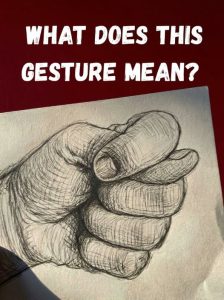
A simple hand gesture can sometimes communicate more than a long conversation. The image above shows a closed hand with the thumb tucked between the fingers, a gesture commonly known as the fig sign, fig hand, or mano fico. At first glance, it may look like nothing more than an unusual way of positioning the fingers. Yet throughout history and across different cultures, gestures resembling this one have carried meanings involving protection, rejection, luck, fertility, defiance, and even insult.
That complexity is what makes the fig gesture fascinating.
Rather than having one universal definition, its meaning depends heavily on where it is used, who is using it, and the cultural context surrounding it. In some traditions, the gesture has been associated with protection from misfortune or the evil eye. In others, it has been used as a dismissive or offensive gesture. Today, someone might use it simply because they recognize it as an old symbol or because they find its history interesting.
The image invites a broader reflection, however: sometimes our most powerful boundaries are communicated quietly.
A Gesture With an Ancient History
The fig gesture is not a modern invention.
Its history reaches back centuries, particularly into Mediterranean and European traditions. The name “fig” is associated with the resemblance between the thumb and fingers and the shape of a fig fruit.
Historical sources have connected the gesture with various beliefs surrounding fertility, sexuality, protection, and supernatural forces. Ancient cultures often assigned symbolic meanings to hand positions, objects, colors, and movements.
That should not be surprising.
Before modern communication technology, people relied heavily on gestures and symbols. A movement of the hand could communicate something that words could not.
Some gestures were associated with religious beliefs.
Others were believed to ward off bad luck.
Some were intentionally provocative.
Others were playful.
The fig gesture exists within that complicated history.
Protection From the Unknown
One of the most interesting interpretations of the fig gesture is its association with protection.
In traditional folklore, people sometimes used particular gestures as protective signs against negative forces, bad luck, or the evil eye.
The underlying idea is simple: when something frightening or uncertain cannot be controlled directly, people create symbols that make them feel protected.
This is a very human response.
Throughout history, people have worn charms, carried lucky objects, crossed their fingers, touched wood, or performed symbolic gestures when facing uncertainty.
Whether or not someone believes such actions have supernatural power, the psychological effect can still be meaningful.
A protective gesture can serve as a reminder:
I am safe. I can endure this. I do not have to let fear control me.
The Power of a Boundary
The fig gesture can also be interpreted metaphorically as a symbol of boundaries.
A closed hand naturally suggests containment.
The fingers fold inward.
The hand protects what is inside.
The gesture therefore lends itself to a reflection about knowing when to say no.
Modern life constantly asks people to give more of themselves.
More time.
More attention.
More energy.
More explanations.
More emotional availability.
But there are moments when protecting your peace requires the opposite.
It requires closing the door.
It requires stepping away.
It requires saying, “That is enough.”
Healthy boundaries are not necessarily acts of hostility.
They can be acts of self-respect.
Saying No Without Anger
One of the quietest forms of strength is the ability to say no without becoming consumed by anger.
People sometimes believe that setting boundaries requires a dramatic confrontation.
It does not.
You can refuse something without insulting another person.
You can leave a conversation without winning the argument.
You can stop explaining yourself to someone who has already decided not to understand you.
You can choose peace over proving your point.
The symbolism of the closed hand can therefore become a useful metaphor.
Not every battle deserves your energy.
Not every accusation deserves a response.
Not every invitation deserves a yes.
And not every person deserves unlimited access to your time.
Protection Is Not the Same as Isolation
There is an important distinction between healthy boundaries and complete isolation.
Protecting your peace does not mean shutting everyone out.
Human beings need connection.
We need friendships, family, companionship, conversation, affection, and community.
A boundary is not a wall around your entire life.
It is more like a door.
You decide when it opens.
You decide when it closes.
And you decide who is allowed to enter.
That distinction is especially important in an age when communication is constant.
Phones, social media, email, messaging applications, and notifications can make people feel as though they are permanently available.
But being reachable does not mean being obligated.
Sometimes the healthiest thing you can do is put the phone down and become unavailable for a while.
The Quiet Strength of Walking Away
There is a particular kind of strength in walking away from unnecessary conflict.
It can be tempting to respond to every criticism.
Someone says something unfair, and we immediately want to defend ourselves.
Someone misunderstands us, and we feel compelled to explain.
Someone provokes us, and we want the final word.
But peace often begins when the need for the final word disappears.
Walking away does not always mean surrender.
Sometimes it means recognizing that continuing the argument will cost more than it is worth.
Silence can be a boundary.
Distance can be a boundary.
And sometimes simply refusing to participate can be the strongest response available.
Why Symbols Remain Important
Symbols survive because humans are naturally drawn to meaning.
A simple object or gesture can remind us of an idea.
A wedding ring can represent commitment.
A raised hand can represent greeting or solidarity.
A heart can represent affection.
Crossed fingers can symbolize hope or luck.
The fig gesture, depending on cultural context, can represent very different things.
That is an important lesson in itself.
Symbols are not always universal.
The same gesture can communicate affection in one setting and offense in another.
Understanding cultural context prevents misunderstandings.
The Importance of Cultural Awareness
Because the fig gesture has multiple meanings, it is wise not to assume that everyone interprets it identically.
In some cultures and historical contexts, it has been associated with protection or luck.
Elsewhere, versions of the gesture have been used as vulgar or insulting signs.
This is a reminder that body language is not a universal language in the way people sometimes imagine.
A gesture’s meaning can change across countries, generations, and social groups.
When traveling or communicating with people from different cultures, paying attention to context is essential.
What feels harmless to one person may be offensive to another.
What looks mysterious may have an ordinary cultural explanation.
And what appears universal may actually be deeply regional.
Finding Peace in a Noisy World
The symbolic interpretation of the fig gesture as protection provides a useful modern metaphor.
Life can become noisy.
There are constant demands, opinions, arguments, expectations, and distractions.
Sometimes peace requires deliberately creating space.
That might mean taking a walk without your phone.
It might mean declining an unnecessary argument.
It might mean spending an evening away from social media.
It might mean telling someone honestly that you need time to yourself.
These actions are not selfish when they help restore balance.
Rest is not weakness.
Silence is not emptiness.
And boundaries are not cruelty.
Knowing What to Hold Onto
A closed hand also invites another metaphor: holding onto what matters.
Life contains many things worth protecting.
Family relationships.
True friendships.
Personal values.
Dreams.
Time.
Mental space.
Self-respect.
The challenge is learning what deserves to remain in your hands and what needs to be released.
Not everything deserves to be carried forever.
Some disappointments need to be released.
Some arguments need to end.
Some old versions of ourselves need to be left behind.
Protection is therefore not only about keeping things out.
It can also be about preserving what is valuable inside.
A Symbol of Quiet Resilience
Resilience does not always look dramatic.
Sometimes resilience is getting out of bed after a difficult day.
Sometimes it is choosing not to respond to cruelty.
Sometimes it is starting again after failure.
Sometimes it is forgiving yourself for mistakes you cannot change.
Sometimes it is simply continuing.
The fig gesture, viewed symbolically, can represent that quiet resilience.
The hand closes.
The fingers remain together.
The person continues forward.
There is no need for a dramatic announcement.
There is simply a decision to protect what matters.
Final Reflection
The fig gesture is much more complicated than it first appears.
Historically, it has carried different meanings, including associations with protection, luck, fertility, rejection, and insult depending on cultural context. It should therefore not be treated as having one universal definition.
Yet its symbolism offers a valuable modern reflection.
In a world where people are constantly encouraged to explain themselves, respond immediately, and remain available, there is wisdom in remembering that boundaries can be quiet.
You do not have to answer every question.
You do not have to accept every demand.
You do not have to attend every argument.
You do not have to prove your worth to people committed to misunderstanding you.
Sometimes protecting your peace simply means knowing when to close the door.
The greatest lesson may not be the historical meaning of the gesture at all.
It may be the reminder that peace is something worth protecting.
Hold onto the people who treat you with kindness.
Hold onto the values that guide you.
Hold onto your dignity.
And when something repeatedly threatens your peace, remember that saying no can be an act of wisdom rather than anger.
A small movement of the hand can carry centuries of symbolism.
And in the modern world, its most meaningful lesson may be wonderfully simple:
Protect your peace. Keep your boundaries. Choose your battles carefully.