Shelley Fabares, Star of ‘The Donna Reed Show’ and ‘Coach,’ Dies at 82
Shelley Fabares, the beloved actress and singer whose career stretched from childhood television appearances to two of America’s most enduring sitcoms, has died at the age of 82. Fabares died on August 22, 2026, in Los Angeles, surrounded by loved ones, according to her family. Her cause of death has not been publicly disclosed. (People.com)
For generations of television viewers, Fabares was a familiar and comforting presence. She first became famous as Mary Stone on The Donna Reed Show, where she played the teenage daughter in the wholesome family sitcom. Decades later, she enjoyed another major chapter as Christine Armstrong on Coach, earning two Primetime Emmy nominations for the role. (Los Angeles Times)
Her career also included a successful, if relatively brief, recording career and three films with Elvis Presley. Her 1962 single “Johnny Angel” reached No. 1 on the Billboard Hot 100, making Fabares one of the most recognizable young entertainers of the early 1960s. (People.com)
Her death marks the passing of a performer whose career was deeply connected to several different eras of American popular culture.
A Career That Began in Childhood
Shelley Fabares was born in Santa Monica, California, in 1944. Her connection with show business began extraordinarily early. She started acting as a child and made her first television appearance at just 10 years old on The Loretta Young Show. From there, opportunities in television and film continued to grow. (Los Angeles Times)
By the late 1950s, Fabares had reached the role that would make her famous.
In 1958, she joined The Donna Reed Show as Mary Stone, the daughter of Donna Reed’s character and Dr. Alex Stone, played by Carl Betz. The series became one of the defining family sitcoms of its era, and Fabares appeared in a large number of episodes during its run. (People.com)
The role transformed the young actress into a television star.
Fabares later spoke warmly about Donna Reed, describing her as an important role model and a major influence during her formative years. Their relationship went beyond the normal professional connection between an older and younger actor on a television set. Reed became someone Fabares deeply admired and remained important to her throughout her life. (People.com)
From Television Teenager to Pop Star
Fabares’ success on television soon opened another door.
During the early 1960s, music became part of her professional life. She recorded several songs and unexpectedly achieved enormous success with “Johnny Angel.”
Released in 1962, the song became a No. 1 hit on the Billboard Hot 100. Fabares had not initially imagined herself as a major singer, and later recalled being surprised by the scale of the song’s success. (People.com)
The song became closely associated with the early-1960s teen-pop era.
Fabares ultimately released four albums, although her recording career was considerably shorter than her acting career. Even so, “Johnny Angel” gave her a second identity in popular culture. She was no longer simply the teenage actress from The Donna Reed Show; she was also a chart-topping recording artist.
That combination of television fame and pop success made her one of the recognizable young stars of the period.
Three Movies With Elvis Presley
Fabares’ career took another major turn when she began appearing alongside Elvis Presley.
She starred with Presley in three films: Girl Happy in 1965, Spinout in 1966 and Clambake in 1967. (People.com)
The movies placed her alongside one of the biggest entertainment figures in the world.
For fans of Presley, Fabares therefore became part of a particularly memorable period in his film career. Her performances helped establish her as more than a television actress, while her association with Presley ensured that her work reached audiences far beyond the viewers who had watched The Donna Reed Show.
She also appeared in other films during the 1960s, including Hold On! with Herman’s Hermits. Her movie career, however, remained only one part of a much broader television career.
The Dramatic Side of Shelley Fabares
Although she became famous through comedy and family entertainment, Fabares demonstrated that she could handle serious dramatic material.
One of her most notable performances came in the acclaimed 1971 television film Brian’s Song. She played the wife of Chicago Bears football player Brian Piccolo, whose battle with cancer formed the emotional center of the story. The production became one of the best-known television films of its era. (UPI)
The role was important because it demonstrated the range that existed behind Fabares’ youthful television image.
She was no longer simply the teenage daughter audiences had known from The Donna Reed Show. As she moved into adulthood, she took on increasingly varied roles in television dramas, sitcoms and made-for-television movies.
Her other credits included appearances on One Day at a Time, The Rockford Files, The Love Boat and Murder, She Wrote, among many others. (People.com)
A Second Great Television Chapter: Coach
Fabares’ career received another major boost in 1989 when she joined the cast of ABC’s Coach.
The sitcom starred Craig T. Nelson as Hayden Fox, a college football coach. Fabares played Christine Armstrong, a television newscaster who became the love interest of Nelson’s character and eventually his wife. (EW.com)
The role represented a significant evolution from Mary Stone.
Christine was an accomplished professional woman with her own career and ambitions. Fabares embraced that aspect of the character, describing Christine as a successful woman who loved her work while also navigating her relationship with Hayden. (UPI)
The performance earned Fabares two Primetime Emmy nominations.
She remained with Coach throughout its nine-season run, becoming one of the central figures in the show’s story. (EW.com)
For viewers who had first discovered her in the 1950s, seeing Fabares become the confident adult lead of another successful sitcom was a remarkable continuation of her career.
Her Marriage to Mike Farrell
Fabares’ personal life also included a long and enduring Hollywood partnership.
She married actor Mike Farrell in 1984. Farrell was already known for his role as B.J. Hunnicutt on MASH*, and the two remained together for more than four decades until Fabares’ death. (People.com)
The couple had first met years earlier, in 1970, and later reconnected before marrying. Their relationship became one of Hollywood’s longer-lasting marriages.
Farrell and Fabares also shared a commitment to family and humanitarian concerns. Their life together extended far beyond the entertainment industry.
Fabares became a stepmother to Farrell’s children from his previous marriage, and family remained an important part of her later life. (People.com)
A Personal Connection to Alzheimer’s Awareness
Away from acting, Fabares became an advocate for Alzheimer’s awareness after her mother was diagnosed with the disease.
Her mother’s illness had a profound effect on her. Fabares and Farrell eventually made decisions about their living arrangements partly to help accommodate her mother’s needs. She also became involved in efforts to increase awareness and support research into Alzheimer’s disease. (Los Angeles Times)
That part of her life reflected a different kind of public service.
For someone who had spent much of her life entertaining audiences, Fabares used her public visibility to draw attention to a cause that had personally affected her family.
Facing Serious Health Challenges
Fabares also experienced major health difficulties herself.
In 2000, she underwent a liver transplant after suffering liver failure associated with autoimmune hepatitis. Her recovery became another significant chapter in a life that had already included decades of professional success. (People.com)
Her ability to overcome that life-threatening illness added another dimension to her story.
It also made her later years particularly meaningful. Rather than allowing serious health challenges to erase her identity, she remained connected to the entertainment community and continued to be remembered warmly by colleagues and fans.
Tributes From Friends and Colleagues
Following news of her death, tributes quickly began appearing from people who had worked with Fabares.
Craig T. Nelson, her longtime Coach co-star, remembered her as an extraordinary woman and emphasized her positivity, wisdom and welcoming personality. (EW.com)
Her family similarly remembered her not only as a celebrated performer but as someone who brought warmth, humor, generosity and comfort to the people around her. In a statement reported by PEOPLE, her loved ones described her as a source of love, strength, laughter and comfort. (People.com)
Those descriptions are striking because they go beyond her professional accomplishments.
Fabares’ legacy was not limited to ratings, awards or hit records. Those who knew her personally remembered her character.
Remembering a Remarkable Career
Shelley Fabares belonged to a generation of performers who could move effortlessly between television, movies and music.
She became famous as a teenager on The Donna Reed Show. She reached the top of the pop charts with “Johnny Angel.” She shared the screen with Elvis Presley in three films. She demonstrated her dramatic abilities in Brian’s Song. She appeared on numerous television programs before finding another defining role as Christine Armstrong on Coach. (People.com)
Few performers can claim such a long and varied career.
Perhaps most remarkably, Fabares remained recognizable across generations. Older viewers remembered Mary Stone. Music fans remembered “Johnny Angel.” Elvis Presley fans remembered her film appearances. Television audiences of the late 1980s and 1990s knew her as Christine from Coach.
Each generation had its own Shelley Fabares.
Final Thoughts
Shelley Fabares’ death at 82 marks the end of a remarkable Hollywood journey that began when she was a child and continued for decades. She died in Los Angeles on August 22, 2026, surrounded by loved ones, with her family remembering her as a source of warmth, kindness and strength. (People.com)
For many fans, her passing will bring back memories of The Donna Reed Show, “Johnny Angel,” Elvis Presley movies, Brian’s Song and Coach.
But perhaps the most fitting way to remember Fabares is to recognize the extraordinary longevity of her career.
She grew up in front of American television audiences, became a pop sensation, worked alongside one of the greatest entertainers in music history, successfully transitioned into adult dramatic and comedic roles, and remained part of the entertainment world for generations.
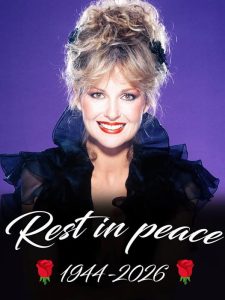
The photograph accompanying tributes to her may capture one beautiful moment from her career, but it cannot contain the full story.
Shelley Fabares leaves behind a body of work that crossed television, film and music—and memories that will continue to live on among the audiences who watched her grow from a young television star into one of Hollywood’s enduring performers.
I can also create a respectful memorial image for this article.