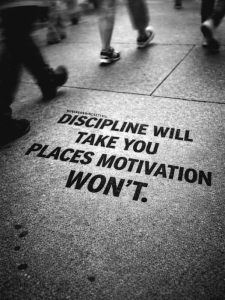
Discipline Over Motivation: Why Consistency Is What Separates Winners From Everyone Else
Anyone can feel inspired for a day.
A powerful speech can make you believe you are ready to change your life. A motivational video can fill you with energy. A new year, a new job, a new goal, or even a difficult moment can suddenly create a burst of determination. For a little while, everything feels possible.
But then reality arrives.
The alarm rings when you are tired. The workout feels harder than expected. The project becomes repetitive. Progress slows down. Nobody notices your effort. The excitement disappears, and the goal that once seemed thrilling starts to feel ordinary.
That is where the real test begins.
Motivation can get you started, but discipline is what keeps you moving when motivation disappears.
The people who accomplish meaningful things are not necessarily the people who feel inspired every morning. They are the people who learn how to take action even when they would rather not.
Motivation Is Temporary
Motivation is an emotion. Like all emotions, it changes.
Some days you wake up energized and confident. You feel ready to exercise, study, work, create, save money, or pursue a dream. On those days, discipline seems unnecessary because taking action feels easy.
But other days are completely different.
You may feel tired. You may have doubts. You may have distractions competing for your attention. You may simply not feel like doing the work.
If your progress depends entirely on motivation, your results will rise and fall with your mood.
This is why people frequently start ambitious goals and abandon them shortly afterward. They mistake the excitement of beginning for the strength required to continue.
Starting is exciting.
Continuing is difficult.
Continuing when the excitement is gone is where discipline becomes powerful.
Discipline Means Keeping Promises to Yourself
Discipline is not about being perfect.
It is about developing the ability to follow through.
When you decide that you will exercise three times a week, discipline means showing up even when you do not feel particularly enthusiastic.
When you decide to study for an hour every evening, discipline means sitting down and beginning even after a long day.
When you decide to build a business, discipline means continuing to learn, improve, and solve problems even when the results are slow.
Every time you keep a promise to yourself, you strengthen your confidence.
And every time you repeatedly break those promises, it becomes easier to stop trusting yourself.
That is why discipline has a deeper effect than simply helping you complete tasks. It changes the way you see yourself.
You begin to think, I am someone who does what I say I will do.
That identity is incredibly powerful.
The Boring Days Matter Most
Most people imagine success as a collection of exciting moments.
They picture the promotion, the championship, the finished book, the successful business, the transformed body, or the financial breakthrough.
What they often fail to see is everything that happened before those moments.
Success is usually built during ordinary days.
Days when nobody is watching.
Days when there is no applause.
Days when the work feels repetitive.
Days when progress is so small that it is difficult to notice.
That is why the message in the image is so meaningful: discipline will take you places motivation won’t.
You do not need to feel extraordinary every day.
You need to be willing to do ordinary things consistently.
One workout may not transform your body.
One study session may not change your career.
One productive morning may not change your life.
But hundreds of workouts, study sessions, productive mornings, and disciplined decisions can create an entirely different future.
Consistency Beats Intensity
Another common mistake is trying to do too much too quickly.
Someone decides to become healthier and immediately creates an extreme workout schedule. Someone wants to learn a new skill and studies for six hours on the first day. Someone wants to become financially successful and attempts to completely change every aspect of their spending overnight.
The initial enthusiasm can be enormous.
But extreme effort is difficult to maintain.
A better strategy is often to create a system that you can repeat.
Instead of promising to exercise every day for two hours, begin with a realistic routine you can sustain.
Instead of trying to master a skill in a week, dedicate consistent time to learning it.
Instead of attempting to completely reinvent your life overnight, improve one important habit at a time.
Small actions may appear insignificant in the moment, but consistency gives them power.
A small improvement repeated hundreds of times becomes something substantial.
Discipline Is Built, Not Discovered
Some people believe disciplined people are simply born that way.
They imagine that successful individuals possess extraordinary willpower that ordinary people do not have.
In reality, discipline can be developed.
It works much like a muscle.
The more you practice following through, the stronger that ability becomes.
Start small.
Choose one commitment.
Maybe it is waking up at a consistent time. Maybe it is reading ten pages each day. Maybe it is taking a daily walk. Maybe it is spending thirty minutes learning something valuable.
The goal is not to become perfect immediately.
The goal is to prove to yourself that you can follow through.
Then gradually increase the challenge.
Eventually, disciplined behavior becomes less dependent on willpower because it becomes part of your routine.
Stop Negotiating With Yourself
One of the biggest enemies of discipline is constant negotiation.
You tell yourself:
“I’ll start tomorrow.”
“I’ll do it after one more episode.”
“I’m too tired today.”
“I’ll make up for it later.”
Sometimes those statements are reasonable. Rest is important, and life occasionally requires flexibility.
But if every uncomfortable situation becomes an excuse, your goals will always remain just beyond your reach.
Disciplined people learn to recognize the difference between a legitimate reason to stop and temporary discomfort.
They understand that feeling tired does not always mean they should quit.
Feeling bored does not mean the activity has lost its value.
Feeling discouraged does not mean failure is inevitable.
Sometimes the most important thing you can do is simply begin.
Your Environment Matters
Discipline is important, but relying exclusively on willpower is inefficient.
Your environment can either support your goals or constantly fight against them.
If you want to exercise in the morning, prepare your clothes the night before.
If you want to read more, keep a book somewhere visible.
If you want to reduce distractions while working, put your phone somewhere out of reach.
If you want to eat healthier, make healthier choices easier to access.
The objective is to make good behavior easier and unwanted behavior more difficult.
Successful habits often come from smart systems rather than heroic amounts of willpower.
Learn to Accept Slow Progress
Perhaps the hardest part of discipline is accepting that results may take time.
Modern culture often makes success look instant.
We see the finished product but rarely see the years of preparation behind it.
We see someone’s successful business but not the nights they spent learning.
We see someone’s physical transformation but not the months of ordinary workouts.
We see the accomplishment but not the thousands of small decisions that created it.
Real progress is often invisible before it becomes obvious.
That means you have to continue even when there is little immediate evidence that your effort is working.
This is where patience becomes part of discipline.
Failure Does Not Cancel Progress
Even disciplined people fail.
They miss workouts. They make mistakes. They procrastinate. They lose focus. They have bad days.
The difference is that they do not allow one bad day to become a permanent pattern.
Missing one workout is a mistake.
Quitting because you missed one workout is a decision.
Eating one unhealthy meal does not destroy your progress.
Giving up completely because you ate one unhealthy meal can.
Discipline does not require an uninterrupted streak.
It requires the ability to return.
Fall off the path?
Get back on.
Lose focus?
Refocus.
Make a mistake?
Learn from it.
The goal is not perfection. The goal is persistence.
The Person You Become Along the Way
Perhaps the greatest reward of discipline is not the achievement itself.
It is the person you become while pursuing it.
You become more reliable.
More patient.
More confident.
More resilient.
You discover that discomfort does not have to control your decisions.
You learn that you can do difficult things without waiting for the perfect emotional state.
And eventually, something remarkable happens.
The behaviors that once required enormous effort begin to feel normal.
You no longer ask, “Do I feel motivated today?”
You simply ask, “What needs to be done?”
That shift can change everything.
Discipline Creates Freedom
At first glance, discipline can seem restrictive.
It sounds like rules, schedules, sacrifice, and saying no.
But long-term discipline can actually create freedom.
Financial discipline can create financial freedom.
Physical discipline can create greater physical capability.
Professional discipline can create career opportunities.
Mental discipline can help you respond rather than react.
The short-term sacrifice can create long-term choices.
You give up some comfort today so that you can have more freedom tomorrow.
That is one of the most important principles behind meaningful achievement.
Keep Going When Nobody Is Watching
The most important work in your life may happen without an audience.
Nobody may congratulate you for waking up early.
Nobody may see you studying after work.
Nobody may know how many times you resisted distraction.
Nobody may notice the small improvements you make every day.
Do it anyway.
Your future does not depend on whether other people witnessed your effort.
It depends on whether you continued.
Motivation is loud.
Discipline is quiet.
Motivation tells you what you could become.
Discipline helps you actually become it.
So when the excitement disappears, do not assume the dream is no longer worth pursuing.
Maybe that is simply the moment when the real work begins.
Because anyone can start when they are inspired.
The people who go further are the ones who keep showing up when it gets boring, repetitive, uncomfortable, and hard.
You do not have to feel ready.
You do not have to feel excited.
You do not have to be perfect.
You simply have to take the next step.
Then another.
And another.
Eventually, those small steps become distance.
That distance becomes progress.
And progress, repeated long enough, can become the life you once thought was impossible.