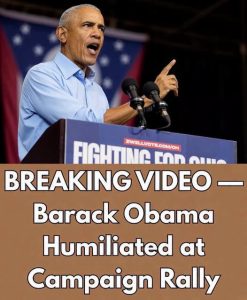
BREAKING VIDEO: Barack Obama Humiliated at Campaign Rally? Viral Controversy Sparks Political Debate
A political controversy involving former U.S. President Barack Obama has attracted widespread attention after a viral headline claimed that he was humiliated during a campaign rally. The story has generated questions about what really happened, who challenged his message, and why the incident has become a topic of discussion across social media.
However, the actual events are more complicated than the dramatic headline suggests. Obama was not publicly confronted onstage by the person at the center of the controversy. Instead, the dispute developed after his October 24, 2026, campaign appearance in Detroit, Michigan, when NBA champion Kyle Kuzma criticized the former president’s remarks in a social-media post.
The disagreement has opened a broader conversation about political messaging, economic hardship, religious representation, and what voters expect from public figures during an important election campaign.
What Happened at the Campaign Rally?
Obama appeared in Detroit to support Democratic candidates Abdul El-Sayed, who was running for the U.S. Senate, and Jocelyn Benson, a candidate for governor.
The event was part of a wider campaign effort ahead of the November 3 midterm elections.
During his speech, Obama encouraged voters to support the candidates and discussed the importance of representation in American politics. He specifically highlighted the possibility of a Muslim man and a Jewish woman working together in the Senate.
His message was intended to emphasize cooperation across religious and cultural backgrounds.
But not everyone agreed with the emphasis of his remarks.
The discussion quickly moved beyond the rally itself, eventually attracting criticism from an unexpected voice in professional sports.
According to reporting about the event, Obama also addressed political attacks against El-Sayed and compared some of the criticism with the false claims about his own birthplace and identity that he faced during his presidential campaigns.
AP News+1
Kyle Kuzma Enters the Debate
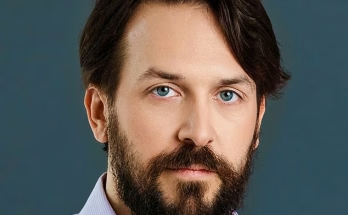
One of the most talked-about reactions came from NBA champion Kyle Kuzma, who grew up in Flint, Michigan.
Kuzma took issue with the emphasis Obama placed on religious representation during the Detroit appearance.
In a social-media post, he questioned why the campaign was focusing so heavily on the religious identities of politicians when many Michigan residents were dealing with serious economic challenges.
His criticism centered on poverty and the financial difficulties experienced by working families.
Kuzma argued that political leaders should pay more attention to issues that directly affect people’s everyday lives, including employment, housing costs, and economic opportunity.
His comments attracted attention because they came from a well-known professional basketball player rather than a traditional political commentator.
Importantly, Kuzma did not walk onto the stage or publicly challenge Obama during the rally. His criticism appeared in a social-media post after the event. The viral description of Obama being humiliated therefore exaggerates what actually happened.
News Site
Why Poverty Became the Center of the Controversy
Michigan has communities facing significant economic challenges, and Flint has a particularly complicated history.
The city became nationally known during the Flint water crisis, which exposed serious failures in public infrastructure and government accountability.
Although the crisis involved environmental and public-health issues, it also highlighted broader concerns about inequality, public investment, and the difficulties facing working-class communities.
Kuzma’s criticism brought some of these concerns back into the political conversation.
He referenced poverty among Black residents in Michigan and questioned whether candidates were giving enough attention to the financial realities experienced by ordinary families.
His argument reflected a broader political question: Should campaign speeches prioritize symbolic representation, or should they concentrate primarily on economic problems?
There is no simple answer.
Representation can matter enormously to communities that have historically felt excluded from political power. At the same time, voters struggling to pay rent, afford groceries, and find stable employment may want immediate economic solutions rather than symbolic promises.
Both subjects can be important, and political leaders are frequently challenged to explain how their priorities translate into practical improvements.
Obama’s Message About Representation
Obama’s remarks in Detroit were connected to a larger theme that has followed him throughout his political career.
As the first Black president of the United States, he frequently spoke about diversity, opportunity, and the importance of people from different backgrounds participating in government.
During the campaign appearance, he defended Abdul El-Sayed against criticism involving his Muslim faith.
He also highlighted the possibility of cooperation between El-Sayed and Jewish Senator Elissa Slotkin.
For Obama, the message was about demonstrating that people with different religious identities could work together in public service.
Supporters of this approach argue that representation helps strengthen democratic institutions by allowing different communities to see themselves reflected in government.
Critics, however, may argue that representation should not become a substitute for addressing the economic concerns of voters.
That disagreement is at the heart of the controversy.
The Other Viral Video: Obama’s Microphone Toss
Another development helped bring additional attention to Obama’s Michigan appearance.
A separate video showing Obama tossing his microphone to an aide as he left the stage went viral online.
The clip was shared by the El-Sayed campaign and attracted millions of views.
The moment came after Obama delivered sharp criticism of President Donald Trump and made jokes about the White House renovation project.
Many social-media users praised the microphone toss as a confident ending to his speech.
Others focused on the political remarks that preceded it.
The Independent reported on October 28 that the video had attracted approximately five million views on X.
The Independent+1
These separate developments should not be confused: the microphone video showed Obama leaving the stage, while Kuzma’s criticism was published afterward.
A Bigger Debate About What Voters Want
The disagreement illustrates an important challenge facing politicians during election campaigns.
American voters do not all have the same priorities.
Some want stronger protections against discrimination and greater representation in government. Others want candidates to concentrate on inflation, employment, affordable housing, healthcare, and public safety.
Many voters want all these issues addressed together.
For a family struggling financially, political speeches can sometimes feel disconnected from everyday reality.
A person working multiple jobs may be less interested in campaign symbolism than in whether their paycheck can cover monthly expenses.
A young graduate may want to know whether affordable housing and good employment opportunities will become more accessible.
A small-business owner may be concerned about taxes, borrowing costs, and the ability to keep employees.
These concerns explain why Kuzma’s criticism gained attention beyond the world of basketball.
It also demonstrates how celebrities and athletes can influence political conversations, even when they do not hold elected office.
Obama’s Political Influence Remains Significant
Despite the controversy, Obama remains an influential figure in Democratic politics.
His appearances at campaign events can attract considerable media attention, particularly when he criticizes Republican leadership or encourages voters to support Democratic candidates.
His recent appearances in Ohio and Michigan demonstrated that he continues to play an active role in efforts to energize Democratic voters ahead of the midterm elections.
The Associated Press reported that Obama criticized what he described as cruelty and indecency in Republican campaigning and encouraged voters to participate in the upcoming elections.
AP News
His continued involvement also demonstrates how former presidents can remain influential long after leaving the White House.
However, public influence does not mean every speech will receive universal approval. Even popular political figures can face criticism from people who agree with some of their positions but disagree with others.
What Happens Next?
The controversy surrounding Obama’s Detroit appearance is likely to remain part of the wider political discussion as the November elections approach.
For Democrats, the challenge is to communicate messages about representation, equality, and opportunity while demonstrating that they understand the financial pressures facing ordinary Americans.
For Republicans, Obama’s campaign appearances provide another opportunity to criticize Democratic priorities and challenge the former president’s continued influence.
For voters, the most important question is whether candidates can turn their campaign promises into meaningful results.
Ultimately, the debate involving Obama and Kuzma is bigger than one speech or one social-media post.
It reflects the competing expectations Americans have of their political leaders.
The bottom line: Barack Obama was not literally humiliated in a confrontation at the Detroit campaign rally. The controversy arose after Kyle Kuzma criticized his remarks online, while a separate microphone-toss video attracted millions of views. The dramatic viral headline combines these developments into a misleading description of what actually happened.