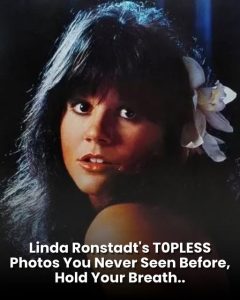
Linda Ronstadt’s Rare Photos Have Fans Looking Back: The Legendary Singer’s Beauty, Confidence, and Extraordinary Life
Linda Ronstadt has spent decades captivating audiences with her extraordinary voice, unforgettable performances, and remarkable musical talent. From country-rock classics to emotional ballads, she became one of the most influential female singers of her generation. Her career has crossed musical boundaries, inspired countless artists, and earned her a permanent place in American music history.
Over the years, photographs of the legendary performer have continued circulating among longtime fans, bringing back memories of her younger days, glamorous appearances, and unforgettable stage performances.
Sensational headlines about supposedly never-before-seen photographs may attract attention, but there is much more to Linda’s story than provocative claims about her appearance. Her life is a fascinating journey involving fame, independence, artistic courage, personal challenges, and a musical legacy that continues to inspire new generations.
The Controversial Photograph That Became Part of Music History
Interestingly, there is a real story behind some of the headlines about Linda Ronstadt’s revealing photographs.
In 1976, the singer participated in a photo session for Rolling Stone magazine with celebrated photographer Annie Leibovitz. The resulting images showed Ronstadt wearing red lingerie, creating an image that was considerably different from the musical personality many fans associated with her.
However, the photographs became controversial because Ronstadt later expressed dissatisfaction with how the images were handled.
In interviews, she described feeling that she had not been given the opportunity to approve their publication. Leibovitz offered a different account of what happened, creating a disagreement that attracted attention years later.
The story was particularly significant because Ronstadt did not want her appearance to overshadow her musical accomplishments.
She later explained that the experience influenced her decision to change the direction of her next album’s visual presentation. For the cover of Simple Dreams, released in 1977, she preferred an image that did not emphasize a provocative appearance.
This historical episode reveals something important about the singer. Even during the height of her fame, she wanted to maintain control over how audiences perceived her.
The story is documented in retrospective coverage of the controversial photo session. It involved lingerie photographs, not evidence of newly discovered topless images.
cheatsheet.com+1
The Rise of a Musical Superstar
Linda Ronstadt was born on July 15, 1946, in Tucson, Arizona. She grew up in a family where music played an important role in everyday life.
Her father introduced her to traditional Mexican music, while other influences included folk, country, opera, and popular American songs.
These early experiences helped shape the remarkable musical versatility that would eventually distinguish her from many other performers.
In the 1960s, she moved to Los Angeles and joined the folk-rock group the Stone Poneys with Bob Kimmel and Kenny Edwards.
The group achieved success with the song “Different Drum,” which introduced audiences to Ronstadt’s distinctive voice.
She eventually pursued a solo career, and her breakthrough came with the 1974 album Heart Like a Wheel.
The record featured memorable songs including “You’re No Good” and “When Will I Be Loved.”
It also earned her first Grammy Award, helping establish her as one of the most important female performers of the decade.
Songs, Family and Facts+1
The Songs That Made Her Unforgettable
Few singers have demonstrated the ability to move comfortably between musical genres in the way Linda Ronstadt did.
Her recording of “Blue Bayou” became one of her signature performances. The emotional delivery, beautiful melody, and expressive voice helped make the song a lasting favorite.
Other memorable recordings included:
-
“You’re No Good”
-
“When Will I Be Loved”
-
“Long, Long Time”
-
“It’s So Easy”
-
“Poor Poor Pitiful Me”
-
“Desperado”
-
“Different Drum”
-
“Somewhere Out There”
Each song revealed another aspect of her musical personality.
Some performances were energetic and rebellious, while others were gentle, emotional, and deeply personal.
Her ability to interpret songs written by other musicians was particularly impressive. She did not simply reproduce the original performances. She brought her own personality and emotional understanding to every recording.
That quality helped her build a career that remained successful even as musical trends changed.
A Fashion Icon of the 1970s
The 1970s were an unforgettable period for fashion, music, and celebrity culture.
Linda became associated with the relaxed but glamorous style of the California rock scene.
Her long hair, expressive features, stage clothing, and confident personality made her instantly recognizable.
Unlike performers who depended on elaborate costumes, Ronstadt often looked comfortable in relatively simple outfits.
She could appear in jeans and a casual shirt during one public appearance and wear an elegant dress during another.
Her fashion choices reflected the spirit of the era, when musicians increasingly challenged traditional expectations about how female performers should look and behave.
Nevertheless, her experience with the 1976 magazine photographs demonstrated that she was not always comfortable with the entertainment industry’s emphasis on appearance.
She wanted her voice and artistic decisions to remain central to her identity.
That distinction remains an important part of her story.
Exploring Her Mexican Musical Heritage
One of the most remarkable chapters in Linda’s career came when she decided to explore the traditional Mexican music she had grown up hearing.
In 1987, she released Canciones de Mi Padre, an album celebrating traditional Mexican songs and her family’s musical heritage.
The project was particularly meaningful because it connected her international success with the traditions that had influenced her childhood.
Rather than following the commercial expectations surrounding her English-language recordings, she embraced music that was deeply personal to her.
The album became an enormous success and introduced traditional Mexican music to many American listeners who might not otherwise have explored it.
It also demonstrated that Linda was willing to take artistic risks even when she was already one of the world’s most successful singers.
The recording remains an important achievement in her discography and a powerful expression of her cultural roots.
Songs, Family and Facts+1
Her Historic Collaboration With Dolly Parton and Emmylou Harris
Another extraordinary moment in Ronstadt’s career involved two other legendary female musicians: Dolly Parton and Emmylou Harris.
Together, the three performers created the group known as Trio.
Their 1987 album showcased the remarkable chemistry between their voices.
The project included beautiful harmonies and traditional country material, proving that collaboration could produce something extraordinary when talented performers shared a musical vision.
Their friendship and professional relationship became an important part of country music history.
The album earned a Grammy Award and demonstrated Ronstadt’s ability to move between musical worlds without losing her identity.
For many fans, Trio remains one of the most memorable collaborations of the 1980s.
Broadway: Another Unexpected Chapter
Just when audiences thought they understood her musical direction, Linda surprised everyone by stepping onto Broadway.
In 1980, she starred in The Pirates of Penzance, a Gilbert and Sullivan operetta.
The production allowed her to demonstrate a different set of artistic abilities. Her performance received considerable attention and earned her a Tony Award nomination.
She later appeared in the film adaptation, further expanding her career beyond traditional recording and concert performances.
This willingness to experiment became one of the defining characteristics of her professional life.
She never seemed interested in repeating the same formula simply because it had worked before.
The Health Challenge That Changed Everything
Behind the extraordinary career, however, Linda eventually faced a challenge that changed her relationship with music.
In 2013, she publicly revealed that she had been diagnosed with Parkinson’s disease.
The condition affected her physical abilities and eventually made singing impossible.
For someone whose entire professional identity had been built around her voice, this was an incredibly difficult transition.
She had spent decades performing for enormous audiences, recording albums, and sharing her interpretations of songs with millions of listeners.
Suddenly, the activity that had defined her life was no longer physically possible.
Nevertheless, Linda continued sharing her experiences through interviews, writing, and public appearances.
Her 2013 memoir, Simple Dreams: A Musical Memoir, offered readers an opportunity to understand her journey from childhood in Arizona to international musical success.
Her story also became the subject of the acclaimed 2019 documentary Linda Ronstadt: The Sound of My Voice.
The documentary featured reflections from people who had worked with and admired her, including Dolly Parton, Emmylou Harris, and Bonnie Raitt.
Songs, Family and Facts+1
Why Her Legacy Continues to Inspire Fans
Linda Ronstadt’s achievements extend far beyond the number of albums she recorded.
She received numerous honors, including competitive Grammy Awards, a Rock & Roll Hall of Fame induction in 2014, and the Kennedy Center Honors in 2019.
Her influence can be heard in the work of generations of singers who followed her.
She helped establish that female performers could be commercially successful while maintaining their artistic independence.
She also demonstrated that a musician did not need to remain within one genre to build a lasting career.
From rock and country to opera, jazz standards, and traditional Mexican music, her artistic journey was unusually adventurous.
That is why her photographs, interviews, and recordings continue to attract attention.
Final Thoughts: More Than a Photograph
The headlines promising never-before-seen topless photographs might create curiosity, but Linda Ronstadt’s real story is considerably more interesting.
Her life includes musical triumphs, controversial magazine photography, artistic independence, personal challenges, and an extraordinary contribution to American music.
The historical lingerie photographs are part of a complicated chapter in her relationship with celebrity culture. They also remind us that famous performers deserve a say in how their images are presented.
Today, Linda’s greatest legacy is not a photograph or a fashion moment. It is the music she created and the courage she demonstrated by following her own artistic instincts.
For longtime fans, hearing the opening notes of “Blue Bayou” or “You’re No Good” can bring back memories of an unforgettable musical era.
And although she can no longer perform as she once did, her recordings continue to reach listeners around the world.
Linda Ronstadt may have stepped away from the stage, but her voice, influence, and remarkable story will never disappear.