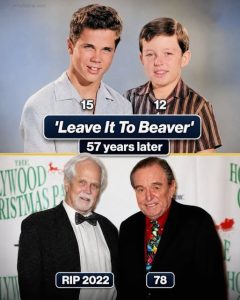
Jerry Mathers at 78: Remembering ‘Leave It to Beaver’ and the Beloved Television Family That Captured America’s Heart
More than six decades after Leave It to Beaver first appeared on television, its familiar characters continue to hold a special place in the hearts of audiences. For generations of viewers, Jerry Mathers will always be Theodore “Beaver” Cleaver, the curious young boy whose everyday adventures turned an ordinary suburban family into one of television’s most recognizable households.
Now 78, Mathers represents the surviving member of the show’s central Cleaver family quartet. The deaths of his television parents, Hugh Beaumont and Barbara Billingsley, and his onscreen older brother, Tony Dow, have made his connection to the original family especially meaningful.
Tony Dow’s passing in 2022 was particularly emotional for longtime fans. The two actors had spent years portraying brothers, but their relationship extended beyond the television screen. Their shared memories, friendship, and work together helped preserve the special place the sitcom holds in television history.
The story of Leave It to Beaver is not simply about an old television program. It is about childhood, family relationships, growing up, and the kind of storytelling that continues to bring people together.
The Beginning of a Television Classic
Leave It to Beaver premiered on October 4, 1957, introducing viewers to the Cleaver family and their everyday experiences in the fictional American town of Mayfield.
The sitcom followed Theodore Cleaver, affectionately known as Beaver, as he navigated childhood with the help of his family, friends, and teachers.
Although the premise sounded simple, the show’s appeal came from its relatable situations. Beaver frequently found himself in misunderstandings, made mistakes, and learned valuable lessons along the way.
His older brother, Wally, often provided another perspective. Wally was more mature and experienced, but he also faced the familiar challenges of adolescence.
Their parents, Ward and June Cleaver, attempted to guide their sons through the ups and downs of growing up.
The series ran for six seasons, producing more than 230 episodes before its original television run concluded in 1963. It became one of the best-known family sitcoms of its era.
Classic TV Database+1
What made the show special was its ability to turn ordinary family experiences into entertaining stories.
A misunderstanding at school, an argument between brothers, a forgotten responsibility, or a small childhood adventure could become the foundation of an entire episode.
For viewers, the Cleavers gradually became more than fictional characters. They represented a familiar television family whose experiences could be enjoyed by parents and children alike.
Jerry Mathers: The Boy Who Became the Beaver
Born on June 2, 1948, Jerry Mathers began his entertainment career as a child actor before becoming internationally recognized through his role as Beaver Cleaver.
His performance made him one of the most recognizable young television stars of the late 1950s and early 1960s.
Beaver was not portrayed as a perfect child. He was curious, occasionally stubborn, sometimes mischievous, and frequently confused by situations that seemed simple to adults.
That was precisely what made the character appealing.
Audiences could recognize their own childhood experiences in Beaver’s adventures. He made mistakes, learned from them, and gradually developed a better understanding of the world around him.
Mathers’ natural performance helped make the character believable.
Even though he was acting, his portrayal often felt like watching a real child experiencing everyday life. His expressions, reactions, and interactions with the other characters gave the series much of its warmth.
Over the years, Mathers has continued to embrace the role that made him famous.
He has participated in interviews, reunions, and appearances celebrating the program’s legacy. His continued connection to the series has allowed longtime fans to revisit memories of a television era that remains important to American popular culture.
In June 2026, Mathers celebrated his 78th birthday, marking another milestone in a life closely connected with television history.
HELLO!+1
Tony Dow: The Beloved Brother Fans Never Forgot
For many viewers, Beaver’s older brother Wally was just as important to the show’s success.
Tony Dow brought Wally Cleaver to life, creating a character who was responsible, intelligent, and generally more mature than his younger brother.
Wally frequently found himself helping Beaver understand difficult situations. Although the brothers sometimes disagreed, their relationship reflected the familiar mixture of affection, rivalry, and loyalty found in many families.
Dow’s performance became an important part of the show’s identity.
Away from the cameras, he and Mathers developed a friendship that continued long after the original series ended.
In fact, Mathers spoke warmly about his television brother following Dow’s death in July 2022, describing him as a kind, generous, gentle, and loving person.
He also expressed how deeply the loss affected him, explaining that Dow was not simply his brother on television but someone who had become like family in real life.
Jefferson City News Tribune+1
Dow was 77 when he died.
His passing represented the end of an important chapter for fans who had grown up watching the two actors together.
Although the original episodes remain available to new audiences, the friendship between the performers is one of the reasons their work continues to feel personal and meaningful.
Remembering Hugh Beaumont and Barbara Billingsley
No discussion of the Cleaver family would be complete without remembering the actors who portrayed Beaver’s parents.
Hugh Beaumont played Ward Cleaver, the father who often provided thoughtful advice and attempted to teach his sons important lessons.
Ward was not portrayed as an unrealistic, flawless parent. He sometimes became frustrated with his children, but he generally approached family problems with patience and understanding.
Beaumont’s calm performance helped establish the character as a recognizable television father.
He died in 1982, leaving behind a body of work that remains closely associated with classic television.
Barbara Billingsley portrayed June Cleaver, the caring mother whose warmth became one of the defining elements of the series.
June was often seen supporting her sons, offering guidance, and trying to understand their childhood troubles.
Her character became one of television’s most recognizable depictions of motherhood.
Billingsley continued working in entertainment after the sitcom ended, including a memorable appearance in the comedy film Airplane!.
She died in 2010 at the age of 94.
Yahoo+1
With Beaumont, Billingsley, and Dow gone, Mathers is the only surviving actor among the four performers who portrayed the central Cleaver family in the original sitcom.
It is worth distinguishing that from the entire cast: other performers from the broader series, including actors who played Beaver’s friends, were also part of its history.
The Friendship That Continued After the Cameras Stopped
One of the most touching aspects of the Leave It to Beaver legacy is the connection between Jerry Mathers and Tony Dow.
Many television performers move on to different projects after a successful series ends. Some remain friends, while others gradually lose contact.
Mathers and Dow, however, maintained a meaningful relationship throughout their lives.
They shared memories of working together as young actors, growing older in the entertainment industry, and watching audiences continue to appreciate their characters.
Their friendship also became part of the show’s nostalgic appeal.
When fans saw the two actors together at reunions and public appearances, they were reminded of the relationship between Beaver and Wally.
The passage of time made those moments even more meaningful.
The boys who once appeared together on a television set had become older men, but their shared history remained unchanged.
Dow’s death in 2022 was therefore not simply the loss of a familiar television personality. For Mathers, it was also the loss of a longtime friend.
Their on-screen relationship had become part of a real-life story that lasted for decades.
What Happened After the Original Series Ended?
Although the original sitcom ended in 1963, the characters were not completely gone from television.
In the 1980s, the story returned through The New Leave It to Beaver.
Mathers and Dow reprised their familiar characters, allowing audiences to see what had happened to Beaver and Wally as adults.
The continuation offered a nostalgic experience for longtime viewers while introducing the Cleaver family to a newer generation.
Dow also became involved in directing and other creative projects. Beyond acting, he developed an interest in sculpture and gained recognition for his artistic work.
Mathers continued making public appearances and discussing the show that had shaped his career.
The revival demonstrated something important about the series: viewers were not simply interested in the childhood adventures of two fictional brothers. They had developed a lasting attachment to the characters and wanted to know how their stories continued.
Why ‘Leave It to Beaver’ Still Matters Today
Television has changed dramatically since the 1950s.
Modern sitcoms often feature faster storytelling, more complicated characters, and humor that reflects contemporary social experiences.
Yet classic programs such as Leave It to Beaver continue attracting viewers.
Part of the reason is nostalgia.
For older audiences, the show can bring back memories of childhood, family television nights, and a time when watching a favorite program was something the entire household could enjoy together.
For younger audiences, the series offers an opportunity to explore an earlier period of television history.
Its stories also contain themes that remain recognizable.
Children still make mistakes. Brothers and sisters still disagree. Parents still try to guide their children through difficult situations.
Although the clothes, technology, and social expectations have changed, many of the emotions remain familiar.
The show also provides an interesting look at how American television portrayed family life during the late 1950s and early 1960s.
Its idealized suburban setting does not represent every family’s experience, but it reflects a particular television tradition that influenced countless programs that followed.
The Television Academy’s historical overview continues to recognize the series as an enduring example of classic American sitcom storytelling.
Television Academy Interviews+1
Jerry Mathers: A Living Connection to Television History
At 78, Jerry Mathers remains a recognizable connection to a television era that many fans remember with affection.
His journey from child performer to enduring television personality is unusual.
Many child actors struggle to remain associated with one famous role without allowing it to define their entire lives. Mathers, however, has maintained a warm relationship with the character that introduced him to millions of viewers.
For longtime fans, seeing him today can bring back memories of sitting in front of a television and watching Beaver get into another little adventure.
His connection to Tony Dow also gives the show’s history a deeply personal dimension.
Their performances helped create a believable sibling relationship, and their real-life friendship made the story behind the cameras just as memorable.
Although the original Cleaver family can no longer reunite in person, their performances remain preserved through television recordings, photographs, interviews, and memories shared by generations of viewers.
Final Thoughts: Some Television Families Never Really Say Goodbye
The story of Leave It to Beaver is about much more than a successful sitcom.
It is about the performers who brought the characters to life, the friendships that developed behind the scenes, and the audiences who welcomed the Cleaver family into their homes.
Jerry Mathers, now 78, remains the last surviving member of the original four-person Cleaver family cast.
Tony Dow’s death in 2022 was a heartbreaking moment for fans, particularly those who remembered the genuine friendship between the two actors.
Hugh Beaumont and Barbara Billingsley also left behind performances that helped define the series and its enduring place in television history.
Their work continues to live through the episodes that audiences revisit year after year.
Perhaps that is the greatest achievement of Leave It to Beaver: its ability to make people smile decades after the cameras stopped rolling.
The actors may have grown older, and some of the familiar faces are no longer with us, but the characters remain part of television history.
For millions of fans, Jerry Mathers will always be Beaver, Tony Dow will always be Wally, and the Cleavers will always be one of television’s most memorable families.
Some shows entertain us for a season. Others become part of our lives.
Leave It to Beaver belongs to the second category.
And as long as audiences continue watching, remembering, and sharing those stories with their children and grandchildren, the Cleaver family’s legacy will live on. 💫
Fact-checking note: The article uses “only surviving member” specifically for the four central Cleaver family actors, not the entire original ensemble. PBS reported in 2022 that Jerry Mathers and Rusty Stevens were then surviving members of the show’s core cast.