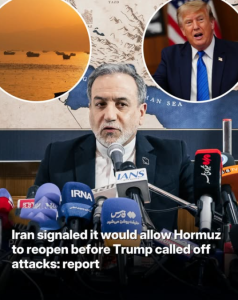
Iran Signaled It Would Allow Hormuz to Reopen Before Trump Called Off Attacks: Report
A new report has shed light on intense behind-the-scenes diplomacy that may have helped prevent a major escalation in tensions between the United States and Iran. According to multiple news reports published on August 2, Iranian officials quietly signaled a willingness to allow shipping through the Strait of Hormuz under certain conditions before President Donald Trump announced he was canceling planned U.S. military strikes against Iranian targets. (New York Post)
If accurate, the development would represent a significant diplomatic breakthrough after months of military confrontation, economic pressure, and growing fears that the conflict could spread across the Middle East. While important questions remain about what was discussed and whether any understanding has been formally reached, the reports suggest that negotiations may have played a larger role than previously known.
A Critical Waterway
The Strait of Hormuz is one of the world’s most strategically important maritime passages. Located between Iran and Oman, it connects the Persian Gulf to the Gulf of Oman and the Arabian Sea. A significant share of the world’s oil and liquefied natural gas exports travels through this narrow channel each day.
Because of its importance, any disruption to shipping in the strait immediately attracts global attention. Even temporary interruptions can cause energy prices to rise, shipping companies to reroute vessels, and governments to increase military patrols in the region.
Throughout recent months, military clashes and political tensions have repeatedly threatened freedom of navigation through the waterway.
Reported Diplomatic Contacts
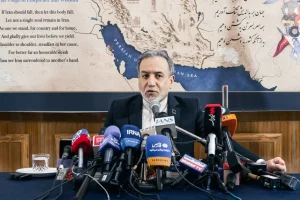
According to reports, Iranian Foreign Minister Abbas Araghchi communicated through diplomatic channels that Iran could accept arrangements allowing commercial shipping to resume safely through parts of the Strait of Hormuz.
The discussions reportedly involved Qatari and American diplomats, while Oman also played an important mediating role. Gulf nations, particularly Saudi Arabia, are also said to have encouraged efforts to reduce tensions and avoid another round of military escalation. (New York Post)
The reported proposal would have allowed vessels to travel through designated navigation routes while broader negotiations continued.
Although details remain limited, diplomats reportedly viewed the communication as a sign that Tehran remained interested in preventing a wider regional conflict.
Trump’s Decision
President Donald Trump later announced that he had decided to cancel planned U.S. military attacks against Iran.
According to Trump, Middle Eastern partners had informed his administration that progress toward a broader agreement was being made. He stated that any future deal would need to include reopening the Strait of Hormuz and addressing concerns over Iran’s nuclear activities. (AP News)
Trump described the decision as an opportunity to give diplomacy additional time while emphasizing that military options remained available if negotiations failed.
Administration officials have also maintained that the United States continues to monitor developments closely and remains prepared to respond if American forces or commercial shipping come under renewed threat. (Reuters)
Iran’s Response
While reports described Iranian diplomatic outreach, officials inside Iran have presented a different narrative.
Iranian military representatives denied that Tehran had requested a halt to American attacks or agreed to reopen the Strait of Hormuz under U.S. pressure. Officials rejected Trump’s characterization of events and insisted that Iran had not sought concessions from Washington. (Middle East Monitor)
These conflicting public statements highlight the complexity of negotiations involving multiple governments, military organizations, and diplomatic intermediaries.
Some analysts believe differences between Iran’s civilian diplomatic leadership and elements of the Islamic Revolutionary Guard Corps (IRGC) may also contribute to mixed public messaging, although those internal dynamics remain difficult to verify independently. (New York Post)
Role of Regional Mediators
Several regional governments have worked behind the scenes to prevent a broader conflict.
Saudi Arabia has reportedly urged restraint while emphasizing the importance of protecting regional energy infrastructure. Oman has long served as a trusted intermediary between Washington and Tehran, hosting or facilitating previous rounds of indirect negotiations.
Qatar has likewise maintained communication channels with both governments during periods of heightened tension.
According to reports, these diplomatic efforts intensified as military planners prepared for possible new U.S. strikes, with Gulf leaders warning that further escalation could threaten regional stability and global energy markets. (The Wall Street Journal)
Why Hormuz Matters
The importance of the Strait of Hormuz extends well beyond the Middle East.
Millions of barrels of crude oil pass through the waterway every day, supplying markets in Asia, Europe, and elsewhere. Major exporters including Saudi Arabia, Iraq, Kuwait, the United Arab Emirates, and Qatar rely heavily on uninterrupted access.
If shipping were significantly disrupted:
- Oil prices could rise sharply.
- Shipping insurance costs would increase.
- Global inflation pressures could worsen.
- Supply chains could experience delays.
- Financial markets could react negatively.
For these reasons, governments around the world closely monitor any developments involving the strait.
Military Pressure and Diplomacy
The reported negotiations illustrate how military pressure and diplomacy often proceed simultaneously.
While military forces prepare contingency plans and governments issue public warnings, diplomats frequently continue private discussions designed to avoid conflict.
In this case, reports suggest that preparations for possible American military action may have coincided with intensified diplomatic outreach involving several regional partners.
Whether one directly influenced the other remains unclear, and officials have offered differing explanations for the sequence of events. (Axios)
Remaining Uncertainty
Despite optimistic reports, significant uncertainty remains.
No comprehensive agreement has been publicly released, and officials from both countries continue to express sharply different views regarding what has been discussed.
Questions still include:
- Has Iran formally committed to reopening the Strait of Hormuz?
- Are negotiations ongoing?
- What security guarantees would accompany any agreement?
- How would compliance be monitored?
- What happens if either side believes the other has violated the understanding?
Until additional official information becomes available, many aspects of the reported diplomatic contacts remain unconfirmed.
International Reaction
Governments across Europe, Asia, and the Gulf have generally welcomed any indication that tensions could decrease.
Energy-importing nations have a strong interest in maintaining uninterrupted shipping through the Strait of Hormuz, while regional governments hope to avoid another cycle of military escalation.
International shipping companies and energy markets continue to monitor developments carefully, recognizing that political negotiations can change rapidly in the region.
Looking Ahead
Whether these reported diplomatic efforts ultimately produce a lasting agreement remains uncertain.
History shows that U.S.-Iran relations have experienced repeated cycles of negotiation, confrontation, and renewed diplomacy. Agreements have sometimes broken down quickly, while periods of heightened military tension have often been followed by renewed talks.
For now, reports indicate that diplomacy may have helped delay another round of military action, but public statements from Washington and Tehran continue to differ substantially regarding what, if any, commitments were actually made. (New York Post)
As negotiations continue, the reopening and secure operation of the Strait of Hormuz will remain a central issue—not only for the United States and Iran, but also for global trade, energy security, and stability across the Middle East.