Viral Image Sparks Outrage as Social Media Claims Woman Put Two Babies in a Fire
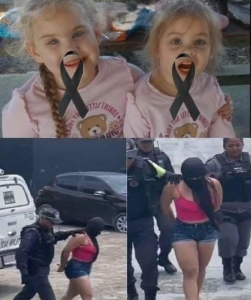
A disturbing image circulating widely across social media has ignited strong emotional reactions, with users sharing claims that a young woman placed two babies into a fire before being arrested by authorities. The collage, which features two smiling children in its upper section and photographs of a woman being escorted by police officers in its lower section, has spread rapidly across multiple platforms, prompting thousands of comments, shares, and expressions of grief.
Despite the intensity of the online response, there is currently no verified evidence that the photographs are connected or that the accompanying caption accurately describes what occurred. As with many viral images, the lack of confirmed information has made it difficult to determine the true circumstances behind the pictures.
The top portion of the collage shows two young children wearing matching pink shirts. Black awareness ribbons have been digitally placed over their mouths, a common editing technique used in viral posts intended to symbolize mourning or tragedy. The lower portion appears to depict a woman in handcuffs being escorted by several uniformed officers. No official markings or captions identify the location, date, or circumstances surrounding the arrest.
Within hours of appearing online, the image generated widespread discussion. Many users accepted the accompanying claims as fact and expressed anger, sadness, and disbelief. Others urged caution, pointing out that emotionally charged posts often circulate before authorities have released verified information.
Law enforcement agencies typically advise the public against relying solely on viral social media posts when evaluating criminal allegations. Investigations involving children are among the most sensitive cases authorities handle, and officials generally release only limited information until facts have been confirmed and families have been notified.
False or misleading posts can spread quickly because they appeal to strong emotions. Images involving children often receive significant attention, even when the accompanying descriptions lack supporting evidence. In many previous cases, photographs have been taken from unrelated incidents and combined into a single collage to create a dramatic narrative that later proved inaccurate.
Digital manipulation has also become increasingly common. Simple edits—including adding awareness ribbons, changing captions, or rearranging unrelated photographs—can dramatically alter how viewers interpret an image. Without original sources or official confirmation, it is impossible to determine whether the people shown are connected or whether the alleged events occurred as described.
Experts in digital literacy encourage internet users to ask several important questions before sharing emotionally charged content:
- Is the information attributed to a named law enforcement agency?
- Has a reputable news organization independently confirmed the claims?
- Does the post identify when and where the incident allegedly occurred?
- Are official court records or public statements available?
- Could the photographs have originated from different events?
If these questions cannot be answered, the safest approach is to treat the claims as unverified until additional information becomes available.
Cases involving alleged harm to children understandably generate intense public concern. Communities often seek immediate answers, but investigators must carefully collect evidence, interview witnesses, and conduct forensic examinations before announcing conclusions. Premature speculation can complicate investigations and unfairly affect individuals involved.
The justice system also requires that criminal allegations be supported by evidence presented in court rather than assumptions formed through social media posts. Arrest photographs alone do not establish guilt, and online captions should not be treated as proof of criminal conduct.
Families connected to high-profile investigations may experience additional trauma when inaccurate information spreads online. Misidentified victims, incorrect names, and fabricated details have all occurred in previous viral cases, underscoring the importance of responsible sharing.
Professional journalists generally follow established verification procedures before reporting serious allegations. These include confirming information with police, reviewing court documents, interviewing multiple sources, and clearly distinguishing verified facts from rumors. This process helps reduce the spread of misinformation during rapidly developing situations.
Readers are encouraged to approach sensational claims with caution, especially when posts lack specific details such as dates, locations, agency names, or links to official announcements. While social media can provide early awareness of breaking events, it should not replace verified reporting.
At this time, based solely on the uploaded image, there is no reliable way to confirm that the woman shown is connected to the children pictured or that the allegation in the caption accurately reflects what happened. Any statement asserting those claims as fact would go beyond the available evidence.
As more information becomes available through official investigations or credible news reporting, a clearer understanding of the circumstances may emerge. Until then, it is important to distinguish between verified facts and unconfirmed social media claims.
Responsible sharing of information helps protect victims, supports ongoing investigations, and reduces the spread of misinformation. In emotionally charged cases, patience and careful verification remain essential to ensuring that public understanding is based on evidence rather than speculation.