BREAKING: Trump Says Talks With Iran Are Ongoing as Tehran Denies Negotiations
A new diplomatic dispute has emerged after U.S. President Donald Trump declared that talks with Iran are currently taking place, even as Iranian officials publicly deny that any direct negotiations are underway. The conflicting statements have added another layer of uncertainty to an already volatile situation in the Middle East, where tensions remain high following months of military confrontations, economic pressure, and disputes over the strategic Strait of Hormuz.
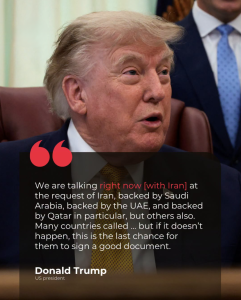
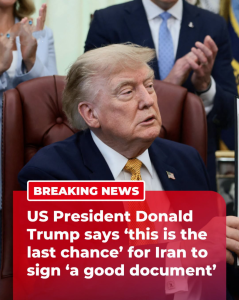
Speaking to reporters, Trump insisted that discussions with Tehran are progressing despite what he predicted would be public denials from the Iranian government. According to the president, diplomatic contacts have continued behind the scenes, and he suggested there remains an opportunity to reach an agreement that could reduce regional tensions and prevent further escalation.
“I know they’ll say we’re not talking,” Trump said, maintaining that discussions have taken place over several hours and expressing optimism that diplomacy could still produce results. While he did not disclose who was participating in the discussions or where they were being held, he portrayed the negotiations as serious and potentially significant.
Iran quickly rejected those assertions.
Iranian Foreign Ministry spokesman Esmail Baghaei stated that Tehran is not engaged in negotiations with the United States and that no direct talks are currently scheduled. Instead, he said Iran’s diplomatic efforts are focused on discussions with Oman concerning navigation and shipping arrangements through the Strait of Hormuz, one of the world’s most strategically important waterways.
The contradiction highlights the deep mistrust that continues to define relations between Washington and Tehran. While both governments have occasionally signaled an interest in diplomacy, public messaging has often diverged sharply, making it difficult to determine the true state of negotiations.
The latest developments come after several days of heightened concern that military action could resume. Trump recently indicated that he had delayed or canceled a planned military operation, arguing that diplomacy deserved another opportunity. He described the current discussions as Iran’s opportunity to reach a broader agreement involving regional security and nuclear issues.
Officials in Tehran, however, maintain that they have not agreed to direct negotiations and reject suggestions that formal talks are underway. Iranian representatives have instead emphasized regional consultations, particularly involving Oman, which has frequently acted as an intermediary between the United States and Iran during previous periods of tension.
Oman has long played a unique diplomatic role in the Gulf. The country has often hosted indirect communications between Washington and Tehran, helping both sides exchange messages without publicly acknowledging formal negotiations. Although neither government has confirmed Oman’s current role beyond regional discussions, analysts note that Muscat remains one of the few capitals trusted by both governments.
Much of the current dispute centers on the Strait of Hormuz, through which a substantial share of the world’s oil exports pass. Any disruption to shipping in the narrow waterway has immediate implications for global energy markets, insurance costs, and international trade.
Recent reports indicate that discussions involving Oman have focused on maintaining safe commercial navigation through the strait. Shipping companies and governments around the world continue to monitor developments closely as any escalation could affect energy supplies and freight routes.
Financial markets have reacted cautiously to the mixed messages.
Oil prices have fluctuated as investors attempt to assess whether diplomacy is genuinely advancing or whether renewed military confrontation remains likely. Historically, even reports of possible negotiations between Washington and Tehran have influenced commodity markets because of the strategic importance of Gulf energy exports.
Foreign policy experts caution that public statements often differ from private diplomatic activity. Governments sometimes deny negotiations while confidential contacts continue through intermediaries. Conversely, political leaders may describe exploratory discussions more positively than participating diplomats would characterize them.
Because of this, outside observers say it remains difficult to verify the precise status of any communications.
The disagreement over whether talks are occurring also reflects broader political considerations on both sides.
For Washington, emphasizing diplomacy may reassure allies and financial markets that every effort is being made to avoid wider conflict. It may also demonstrate that military pressure has encouraged diplomatic engagement.
For Tehran, publicly denying negotiations may reinforce its domestic position by avoiding the appearance of yielding to American pressure while still preserving flexibility for indirect contacts if they serve Iranian interests.
Regional governments are watching closely.
Saudi Arabia, the United Arab Emirates, Qatar, and Oman all have significant interests in preventing further instability in the Gulf. Any prolonged disruption to maritime commerce would affect global trade as well as regional economies, making diplomatic efforts particularly important.
Security analysts say the coming days may reveal whether Trump’s optimistic assessment reflects genuine diplomatic progress or simply preliminary contacts that have yet to evolve into formal negotiations.
For now, neither government appears willing to adopt the other’s public narrative.
Washington continues to describe diplomacy as active and promising.
Tehran continues to insist that no negotiations with the United States are taking place.
Until additional details emerge from officials or independent intermediaries, the true extent of any behind-the-scenes communication remains uncertain.
What is clear is that both governments continue to recognize the enormous consequences of any further military escalation. Whether through direct talks, indirect mediation, or regional diplomacy, pressure remains intense to prevent the crisis from expanding into a broader conflict that could threaten regional stability and global energy supplies.
As events continue to develop, observers will be watching for concrete signs of progress—such as confirmed meetings, joint statements, or confidence-building measures—that could demonstrate whether diplomacy is gaining momentum or whether the competing public narratives simply reflect another chapter in the long and complicated relationship between Washington and Tehran.