Hollywood Legend Andrea Eastman Dies at 86 as Friends Reveal She Had Discussed Assisted Death
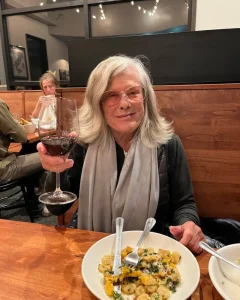
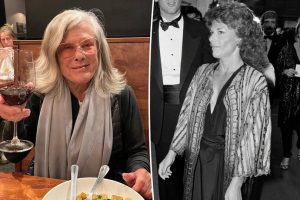
Hollywood is mourning the loss of Andrea Eastman, the influential casting director, agent and entertainment executive whose career helped shape some of the most memorable movies and stars of modern Hollywood.
Eastman died Wednesday at the age of 86, according to her family spokesperson. She died in her sleep at her home in Santa Barbara, California, The Hollywood Reporter and other outlets reported. Her death was confirmed on August 27, 2026. (Hollywood Reporter)
But alongside tributes to her remarkable career, new reports about conversations Eastman had with friends in the months before her death have added an emotional and complicated dimension to her final chapter.
According to Page Six, people close to Eastman said she had discussed California’s End of Life Option Act and was seriously considering the possibility of medical aid in dying. However, her spokesperson did not disclose a cause of death, and there is no confirmation that she used the law or that assisted dying played any role in her death. (Page Six)
That distinction is important.
What has been confirmed is that Eastman had experienced significant health challenges in recent years and had spoken with friends about end-of-life choices. What has not been confirmed is the exact medical circumstances surrounding her death.
A Hollywood Career That Began Behind the Scenes
Andrea Eastman was not a household name in the same way as the actors she represented.
Yet her fingerprints were all over Hollywood.
She was one of the industry’s influential behind-the-scenes figures—a person who could recognize talent, connect the right people and help determine which performers would receive opportunities that could change their careers.
Eastman first became prominent as a casting executive at Paramount Pictures during the transformative period of the late 1960s and early 1970s.
It was an era when Hollywood was changing dramatically.
The old studio system was weakening, younger filmmakers were gaining influence, and audiences were responding to films that felt more realistic, daring and contemporary.
Eastman found herself at the center of that transformation.
One of her early successes involved Ali MacGraw. Eastman encountered MacGraw when she was working as a model and pushed for her to be cast in Goodbye, Columbus. The role helped launch MacGraw toward major stardom. (TheWrap)
But that was only the beginning.
Her Connection to The Godfather
Perhaps Eastman’s most enduring legacy is connected to Francis Ford Coppola’s The Godfather.
The 1972 film would become one of the most influential movies in American cinema, but its eventual cast was not inevitable.
Eastman worked alongside producer Fred Roos and Coppola during the casting process and was involved in bringing Al Pacino and James Caan into the project.
Pacino would, of course, go on to give one of cinema’s defining performances as Michael Corleone.
Caan played Sonny Corleone.
Both became inseparable from the film’s legacy.
The Academy Museum of Motion Pictures now recognizes Eastman’s contributions to the casting of the classic. (TheWrap)
That achievement alone would have secured her a place in Hollywood history.
But Eastman’s career continued far beyond casting.
From Casting Director to Hollywood Superagent
After her work in casting, Eastman moved into the agency business.
That transition was extraordinary.
She eventually became a senior vice president at International Creative Management, better known as ICM, and was described by TheWrap as the first female Hollywood “superagent” after her promotion to the senior vice president level. (TheWrap)
At a time when Hollywood’s most powerful agents were overwhelmingly men, Eastman established herself as a formidable force.
Her client list reads almost like a history of American entertainment.
She represented stars including Barbra Streisand, Sylvester Stallone, Dustin Hoffman, Richard Gere, Christopher Reeve, Jamie Lee Curtis, Chevy Chase, Henry Winkler, Katharine Ross, Christopher Plummer and James Brolin, among many others. (TheWrap)
She also represented or managed performers including Katherine Heigl, Katie Couric and Tony Danza.
Her influence wasn’t simply about negotiating contracts.
A powerful agent can determine which projects a performer hears about, which filmmakers they meet and which opportunities become possible.
Eastman understood that machinery exceptionally well.
The Stars She Helped
Her career included numerous stories of talent being connected with the right opportunity at exactly the right moment.
She was credited with discovering Jaclyn Smith, who would later become famous as one of the stars of Charlie’s Angels.
She also helped connect filmmaker Steven Spielberg with actor Roy Scheider for Jaws, another landmark movie of the era.
And she helped client Billy Crystal secure his role as Harry Burns in When Harry Met Sally…, the beloved 1989 romantic comedy. (Page Six)
These accomplishments illustrate something important about Eastman’s career.
She wasn’t merely a participant in Hollywood history.
She was one of the people helping assemble it.
Health Challenges in Her Later Years
In recent years, Eastman’s life became less focused on Hollywood and more centered on personal interests, animals and her health.
She had undergone open-heart surgery approximately six years before her death, according to reports.
The recovery was difficult.
She spent roughly three months recovering at the Beverly Hills Hotel, where her beloved golden retriever, Trooper, became a major source of comfort.
Eastman’s relationship with Trooper eventually became important enough that she commissioned a children’s book about the experience.
The 2022 book, Trooper at the Beverly Hills Hotel, documented how the dog helped her through her recovery. (Page Six)
In a 2023 interview with Explore Big Sky, Eastman spoke warmly about Trooper and credited the dog with helping her heal.
That story reveals another side of the woman who had spent decades negotiating the careers of some of Hollywood’s biggest stars.
Behind the powerful agent was someone who formed deep emotional bonds with animals.
The Assisted-Death Conversation
The most sensitive part of the story emerged after her death.
Page Six reported that friends said Eastman had spoken in recent months about California’s End of Life Option Act.
One person quoted by the publication said Eastman mentioned the possibility in a casual way but was nevertheless seriously considering medical aid in dying. (Page Six)
California’s law is specific.
The California Department of Public Health says the End of Life Option Act allows an adult diagnosed with a terminal disease who meets certain qualifications to request aid-in-dying medication from a physician. The law remains in effect indefinitely following legislation signed in 2025. (California Department of Public Health)
But discussing the law is not the same as using it.
And that is particularly important in Eastman’s case.
Her family has confirmed that she died peacefully in her sleep, but a spokesperson did not provide a cause of death. Reports about her conversations with friends do not establish that she received or took aid-in-dying medication. (Page Six)
So the most accurate account is that Eastman had considered or discussed an end-of-life option while dealing with health challenges, but the circumstances of her death remain undisclosed.
Her Final Birthday Was a Celebration of Friendship
Perhaps one of the most poignant details to emerge after her death is that Eastman celebrated her 86th birthday in June.
Rather than allowing her age or health challenges to define the occasion, friends and former clients gathered for a virtual birthday celebration.
Among those reported to have participated were Katherine Heigl, Katie Couric, Tony Danza, Billy Crystal, Marla Maples, Cindy Crawford and Dyan Cannon. (Page Six)
Think about what that guest list represents.
These weren’t simply acquaintances.
They were people whose lives had intersected with Eastman’s extraordinary career.
Some had worked with her professionally.
Some had been her clients.
Some had become lifelong friends.
Their willingness to gather for her birthday demonstrated how deeply she remained connected to the entertainment community.
A Woman Who Changed Hollywood Without Being on Screen
There is something fitting about the fact that Eastman’s greatest accomplishments happened behind the camera.
Actors receive applause.
Directors receive awards.
Producers receive headlines.
Agents and casting directors often remain relatively anonymous.
Yet their decisions can change the course of entertainment history.
Eastman’s career is an example.
A young performer gets noticed.
A casting recommendation is made.
An actor gets an audition.
A filmmaker meets the right person.
A star receives the right script.
A career begins.
Eastman participated in countless moments like these.
Her contribution was not one performance.
It was a lifetime of recognizing potential.
A Legacy That Goes Beyond Hollywood
Eastman’s later life also demonstrated that her interests extended beyond entertainment.
She became involved in animal welfare and horse rescue, and reports say she helped establish a sanctuary for abused horses and dogs.
She was also involved in efforts surrounding California’s horse-slaughter ban alongside Robert Redford. (NewsBytes)
That part of her life may surprise people who primarily know her name from The Godfather.
But perhaps it shouldn’t.
People often change as they grow older.
The woman who once spent her days managing movie stars eventually devoted considerable attention to animals and advocacy.
Her priorities evolved.
Her Hollywood career became history.
Her personal passions became increasingly important.
Remembering Andrea Eastman
Andrea Eastman leaves behind a remarkable Hollywood legacy.
She helped discover talent.
She participated in the casting of The Godfather.
She helped build the careers of major performers.
She became one of Hollywood’s pioneering female superagents.
She represented stars whose names defined generations of movies and television.
And later, she found meaning in animals, friendship and causes close to her heart.
The circumstances surrounding her final days may naturally generate questions, particularly because friends have now spoken about her interest in California’s end-of-life law.
But her death should not be reduced to that single detail.
The bigger story is the life that came before it.
Eastman spent decades operating in an industry where influence was often measured by who had access to power.
She earned that access.
And she used it to help shape the careers of people who would become household names.
At 86, she leaves behind former clients, friends and colleagues who can point to moments when her judgment changed their lives.
Her story is ultimately a reminder that Hollywood history isn’t written only by the actors standing in front of the camera.
Sometimes it is written by the people sitting quietly behind the scenes, recognizing talent before anyone else sees it.
Andrea Eastman was one of those people.
And while questions may remain about the final chapter of her life, there is no ambiguity about the extraordinary mark she left on Hollywood. (Hollywood Reporter)