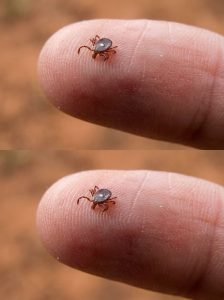
🕷️🔎 Here’s What to Do If You Spot a Lone Star Tick
Finding a tick crawling across your clothing or attached to your skin can be unsettling. And when the tick is identified as a lone star tick, it is understandable to wonder whether you should be worried.
The good news is that finding a lone star tick does not mean you will automatically become sick. The most important thing is to stay calm, remove an attached tick promptly, clean the area, and pay attention to your health afterward.
Lone star ticks are common in much of the eastern, southeastern, and central United States. They can be found in wooded areas, brush, tall grass, leaf litter, and even places close to home. The Centers for Disease Control and Prevention notes that people can encounter ticks while hiking, gardening, walking dogs, camping, or simply spending time outdoors.
One reason lone star ticks receive particular attention is their association with several tickborne illnesses and with alpha-gal syndrome, a potentially serious allergy that can develop after certain tick bites.
So what should you actually do if you spot one?
First, Don’t Panic
A lone star tick crawling on you is not the same as an attached tick bite.
If the tick has not attached itself to your skin, carefully remove it and dispose of it. The immediate concern is preventing it from attaching later.
Ticks can enter homes on clothing, shoes, backpacks, pets, and other belongings. That is why finding one tick should also remind you to check yourself, your family members, pets, and outdoor equipment.
If the tick is attached, however, remove it as soon as possible.
The CDC recommends prompt removal because getting a tick off your body reduces the opportunity for tickborne infections to occur.
How to Remove an Attached Lone Star Tick
You do not need complicated equipment.
A pair of clean, fine-tipped tweezers is the most useful tool.
Grasp the tick as close to the skin’s surface as possible. Try to get a firm hold around the tick’s mouthparts rather than squeezing its swollen body.
Then pull straight upward with steady, even pressure.
Do not twist, jerk, burn, or crush the tick while it is attached. The CDC specifically advises against using substances such as petroleum jelly, nail polish, or heat to try to force the tick to detach.
Once the tick is removed, thoroughly clean the bite area and your hands with soap and water or an appropriate antiseptic.
The key message is simple:
Remove it promptly rather than waiting for it to fall off.
What If Part of the Tick Remains?
Sometimes people become alarmed if they believe a small portion of the tick has remained in the skin.
If the mouthparts break off and you can easily remove them with clean tweezers, you can do so. But if they cannot be removed easily, the CDC advises leaving them alone and allowing the skin to heal rather than repeatedly digging into the skin.
The important thing is that the attached tick itself has been removed.
Afterward, keep an eye on the area and monitor yourself for symptoms.
Should You Save the Tick?
You can choose to keep the tick in a sealed container or bag and record when and where you found it. This may help with identification if you later become ill.
However, routinely sending ticks away for testing is not necessarily useful for determining whether you will develop an illness. A healthcare professional can advise you about whether identification or testing is appropriate in your particular situation.
If you keep the tick, handle it carefully and avoid touching it with bare hands.
Why Lone Star Ticks Matter
The lone star tick is scientifically known as Amblyomma americanum. Adult females are recognizable for the light-colored spot on their backs, which gives the species its common name.
They are found across broad portions of the eastern and southeastern United States, and their range extends into parts of the Midwest and Northeast.
The tick can transmit certain pathogens, including those associated with ehrlichiosis.
Ehrlichiosis can cause symptoms such as fever, chills, headache, fatigue, and muscle aches. More serious illness can occur, particularly when treatment is delayed.
That is why feeling sick after a known tick bite should not simply be dismissed as an ordinary summer illness.
Watch for Symptoms
After removing a tick, pay attention to how you feel.
Symptoms of tickborne illnesses can vary, but common warning signs include:
- Fever
- Chills
- Headache
- Unusual fatigue
- Muscle aches
- Joint pain
- Rash
- General flu-like symptoms
The CDC advises people to watch for symptoms after a tick bite and seek medical attention if they become ill.
You do not necessarily need to become frightened by every minor sensation after finding a tick. But a new fever, significant fatigue, unexplained rash, or flu-like illness after a tick exposure deserves attention.
When speaking with a healthcare professional, mention the tick exposure.
That information can be important when determining what conditions should be considered.
The Alpha-Gal Connection
Perhaps the most unusual concern associated with lone star ticks is alpha-gal syndrome, sometimes called the “red meat allergy” or “tick bite meat allergy.”
Alpha-gal is a sugar molecule found in most mammals. It is not found in humans, birds, reptiles, or fish.
In some people, a tick bite can trigger an immune response to alpha-gal. The CDC says evidence indicates that alpha-gal syndrome in the United States is primarily associated with lone star tick bites, although other tick species have not been completely ruled out.
Importantly, not everyone bitten by a lone star tick develops alpha-gal syndrome.
In fact, simply finding or removing a lone star tick does not mean you have developed the allergy.
The condition is relatively unusual compared with the number of people exposed to ticks, and researchers are still working to understand why some individuals develop it and others do not.
Symptoms of Alpha-Gal Syndrome Can Be Delayed
One unusual feature of alpha-gal syndrome is that symptoms may not occur immediately after the tick bite.
People can develop allergic reactions after eating foods or consuming products containing alpha-gal. Symptoms may include hives, swelling, stomach pain, vomiting, diarrhea, difficulty breathing, or other allergic symptoms.
The reaction can sometimes occur hours after exposure, making it difficult for people to immediately connect the symptoms with something they ate.
The CDC describes alpha-gal syndrome as potentially serious and, in some cases, life-threatening.
If you experience symptoms of a severe allergic reaction—especially difficulty breathing, swelling of the throat or tongue, fainting, or signs of anaphylaxis—seek emergency medical care immediately.
Do not wait for the symptoms to disappear on their own.
Don’t Immediately Blame Every Food Reaction on a Tick
It is equally important not to jump to conclusions.
A tick bite does not automatically mean that every future stomach problem or food reaction is alpha-gal syndrome.
Diagnosis generally involves a healthcare professional evaluating your medical history and symptoms, along with appropriate testing. The CDC notes that an alpha-gal IgE blood test can help with diagnosis, but a positive test by itself does not confirm that someone has the syndrome.
If you develop unexplained allergic reactions after a tick bite, tell your healthcare provider about the exposure.
That detail could be important.
Check Your Clothes and Pets Too
Finding one tick should trigger a broader inspection.
Check your pants, socks, shoes, jacket, backpack, and other outdoor equipment.
Then check your body carefully.
Ticks can hide in areas that are difficult to see, including:
- Behind the knees
- Around the waist
- In and around the ears
- In the hair and along the hairline
- Under the arms
- Between the legs
- Inside the belly button
The CDC recommends showering after coming indoors and performing a thorough tick check. Showering within two hours of coming inside may also help remove unattached ticks.
Don’t forget pets.
Dogs can bring ticks into the house, where the ticks may later attach to people. Regular tick prevention for pets should be discussed with a veterinarian.
How to Prevent Another Encounter
The best way to deal with a tick bite is to prevent it in the first place.
When you’re going into areas where ticks may be present, consider wearing long sleeves and long pants. Tucking pants into socks or boots can reduce exposed skin.
The CDC recommends using EPA-registered insect repellents and treating clothing and gear with products containing 0.5% permethrin when appropriate.
Walking in the center of trails rather than through tall grass and dense brush can also reduce contact with ticks.
And don’t assume ticks are only a problem during one particular month.
Tick activity varies by species and weather conditions, and lone star ticks can be encountered during multiple seasons.
What About Lyme Disease?
This is another area where people sometimes become confused.
A lone star tick is not considered the primary vector for Lyme disease in the United States. Lyme disease is primarily transmitted by blacklegged ticks.
However, lone star ticks can transmit other pathogens, which is why identifying the species can be useful.
The important lesson is not to assume that every tick bite means Lyme disease—or that a lone star tick is harmless.
Different ticks can transmit different diseases.
When Should You Call a Doctor?
You should consider contacting a healthcare professional if you develop symptoms after a tick bite, particularly fever, rash, severe headache, unusual fatigue, or flu-like symptoms.
You should also tell the clinician where you were when the tick exposure occurred and, if known, what kind of tick you found.
Healthcare professionals can determine whether observation, testing, treatment, or additional evaluation is appropriate.
There is no reason to panic simply because you found a lone star tick.
But there is also no reason to ignore a significant illness afterward.
The Most Important Steps to Remember
If you find a lone star tick, remember these basic steps:
Remove it promptly.
Use fine-tipped tweezers.
Pull upward steadily without twisting or jerking.
Clean the bite area and your hands afterward.
Check yourself, your clothing, your gear, and your pets for additional ticks.
Watch for symptoms.
Tell a healthcare professional about the tick exposure if you become sick.
And remember that a tick bite does not automatically mean you will develop a disease.
Final Thoughts
Ticks are small, but they deserve respect.
The lone star tick has become especially well known because of its association with illnesses such as ehrlichiosis and with alpha-gal syndrome. That can make discovering one feel frightening.
But the most useful response is not panic.
It is action.
If the tick is attached, remove it correctly and promptly. Clean the area. Check yourself carefully for additional ticks. Keep an eye on your health.
If symptoms develop, seek medical advice and mention the tick exposure.
And if you spend time outdoors regularly, make tick checks part of your routine rather than something you remember only after finding a tick.
A few minutes of prevention can make a significant difference.
The next time you see a tiny creature crawling across your sock or hiding in the grass, don’t ignore it—but don’t panic either.
Know what you’re looking at.
Know how to remove it.
Know what symptoms deserve attention.
And most importantly, remember that finding a lone star tick is a reason to be careful, not a reason to assume the worst.