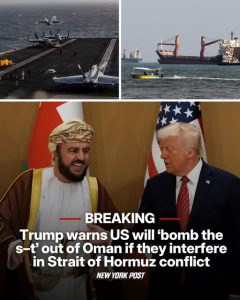
Trump Warns US Will “Bomb the S–t” Out of Oman If It Interferes in Strait of Hormuz Conflict
President Donald Trump has issued a startling warning to Oman as tensions surrounding the Strait of Hormuz continue to intensify, threatening military action if the Gulf nation interferes with U.S. objectives in the strategic waterway.
In an interview with Fox News on Monday, August 17, Trump said that if Oman “gets in the way,” the United States would “bomb the s— out of them.” The comments represent another dramatic escalation in rhetoric surrounding the Strait of Hormuz and the broader U.S.-Iran conflict. (ABC News)
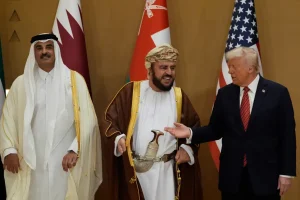
The warning is particularly striking because Oman has long been regarded as an important U.S. partner and one of the region’s most useful diplomatic channels between Washington and Tehran. Rather than being a direct participant in the war, Oman has traditionally tried to maintain relationships with competing sides and facilitate negotiations.
Now, that diplomatic role has placed Muscat directly in the center of a rapidly worsening confrontation.
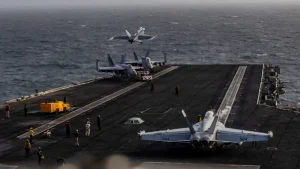
Why the Strait of Hormuz Matters
The Strait of Hormuz is one of the world’s most strategically important waterways.
Located between Iran and Oman, the narrow passage connects the Persian Gulf with the Gulf of Oman and the Arabian Sea. For decades, enormous quantities of crude oil and liquefied natural gas have passed through the waterway.
Reuters reports that the strait previously carried roughly 20% of global oil and LNG supplies. Shipping has now slowed dramatically as the conflict has disrupted maritime traffic. On one recent weekend, only five vessels were reported to have passed through the strait on Saturday and none on Sunday, compared with 31 vessels the previous weekend. (Reuters)
That disruption has consequences far beyond the Middle East.
A prolonged closure or severe restriction of the waterway could affect gasoline prices, transportation costs, industrial production and household expenses around the world. Energy markets are therefore watching every development surrounding the strait closely.
What Triggered Trump’s Warning?
The immediate issue involves negotiations between Iran and Oman over how shipping could operate through the Strait of Hormuz.
According to current reporting, Iran and Oman have been working toward an arrangement involving designated shipping routes and mechanisms intended to facilitate safer passage. Iran’s foreign ministry has said negotiations with Oman were continuing. (ABC News)
The proposed arrangement has become controversial because Washington does not want Iran or another regional power to determine the terms under which international shipping can move through the waterway.
Trump has repeatedly demanded that the strait remain open.
His administration argues that unrestricted commercial navigation is essential to global commerce and that Iran should not be allowed to use the waterway as leverage during the conflict.
That puts U.S. objectives directly at odds with some of the proposals being discussed by Iran and Oman.
Oman’s Unusual Position
Oman’s role makes the situation especially complicated.
Unlike Iran, Oman is not one of the principal combatants in the conflict. Instead, Muscat has historically attempted to maintain diplomatic relationships with countries that frequently disagree with one another.
Oman has served as an important intermediary in Middle Eastern diplomacy precisely because it has generally avoided the kind of confrontational foreign policy associated with some other regional powers.
That history makes Trump’s latest threat particularly significant.
The Guardian described Oman as a longtime U.S. strategic partner and noted that the latest threat came as Washington and Tehran struggled to make progress toward ending the conflict. (The Guardian)
The situation demonstrates how quickly diplomatic relationships can become strained when national security interests collide.
This Was Not the First Warning
Monday’s comments were not the first time Trump has threatened Oman over the Strait of Hormuz.
Earlier this year, Trump warned that Oman would face military consequences if it cooperated with Iran in a way that Washington believed would undermine U.S. objectives concerning the waterway.
A policy analysis from the Arab Center Washington DC noted that Trump had previously warned Oman that it would have to “behave” or face military action if it sought to jointly control the strait with Iran. (Arab Center Washington DC)
The latest comments therefore represent an escalation of an existing dispute rather than an entirely new disagreement.
But the language is nonetheless extraordinary because it involves a country that has historically maintained a cooperative relationship with Washington.
The Broader U.S.-Iran Conflict
The Oman dispute cannot be separated from the larger war involving the United States and Iran.
According to current reporting, negotiations intended to produce a broader agreement have stalled. A 60-day memorandum of understanding expired Monday without producing the breakthrough Washington had hoped for. Trump has previously described the agreement as effectively over, while Iran has characterized it differently. (Reuters)
At the same time, military tensions remain high.
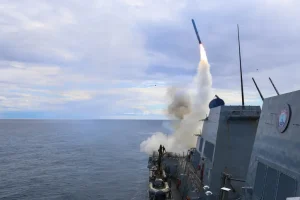
Reuters reported Monday that an Iranian official warned that Tehran could take military action in the Strait of Hormuz if diplomacy failed. The official said Iranian entities should prepare for escalation and warned of a potential attack intended to break the U.S. naval blockade. (Reuters)
That means the possibility of further confrontation is no longer confined to diplomatic statements.
The strait itself has become a potential military flashpoint.
The Economic Stakes Are Enormous
The world’s energy markets are particularly vulnerable to developments in Hormuz.
Even rumors of a prolonged disruption can influence oil prices because traders immediately begin considering whether global supply will be sufficient.
Reuters reported that Brent crude was around $88.58 per barrel on Monday, while U.S. West Texas Intermediate was approximately $82.22. The market had not experienced the extreme shock that some analysts might expect from the rhetoric, but shipping disruptions remain a major concern. (Reuters)
If the crisis were to escalate into sustained attacks on commercial vessels or energy infrastructure, the economic consequences could become much more serious.
Higher crude prices could eventually translate into higher gasoline and diesel costs. Transportation companies could face larger operating expenses, while industries dependent on petroleum products could experience increased production costs.
For ordinary consumers, geopolitical conflict thousands of miles away can eventually show up at the gas pump.
Why Trump’s Threat Is So Significant
Presidents frequently use strong language when attempting to deter adversaries.
However, threatening military action against an allied or friendly country carries a different set of implications.
Oman has not been presented as a primary enemy of the United States. Its role has instead been connected to mediation and negotiations.
That means Trump’s statement could create diplomatic complications even if no military action ultimately occurs.
The purpose of a threat can be deterrence: a warning intended to convince another government not to take a particular action.
But threats can also make negotiations more difficult.
A government publicly threatened by another country may become less willing to compromise, particularly if national sovereignty is perceived to be at stake.
The Danger of Miscalculation
One of the greatest risks in a crisis like this is miscalculation.
The Strait of Hormuz is geographically narrow and heavily trafficked. Military vessels, commercial tankers, patrol boats and other ships operate within a confined area.
When several governments are simultaneously issuing warnings, even a relatively small incident could potentially be interpreted as deliberate aggression.
Iran has already warned that it could escalate if diplomacy fails. The United States continues to insist on its objectives for the waterway. Oman is trying to mediate and negotiate with Iran.
Each side therefore faces pressure to demonstrate that it will not surrender its interests.
That is precisely the environment in which unintended escalation can occur.
What Happens Next?
The immediate focus will likely remain on negotiations over maritime access.
Iran and Oman have reportedly continued discussions concerning routes and navigation arrangements, while Washington remains opposed to any agreement that would effectively give Iran control over access to the waterway. (AP News)
The question is whether diplomacy can produce a compromise acceptable to all three parties.
For Washington, the central demand is straightforward: the Strait of Hormuz must remain open to international shipping.
For Iran, the waterway has become an important source of strategic leverage during the war.
For Oman, the challenge is balancing its relationships while attempting to protect regional stability and facilitate commerce.
Those interests are difficult to reconcile.
A Crisis Bigger Than One Statement
Trump’s threat may dominate headlines, but the underlying crisis is much larger.
The Strait of Hormuz is not merely a political symbol. It is a critical artery for the world economy.
A prolonged confrontation could affect energy markets, shipping companies, governments and consumers across continents.
It could also reshape relationships among the United States, Iran, Oman and other Gulf countries for years.
For that reason, the most important question is not simply whether Trump will follow through on his threat.
The more consequential question is whether the parties can step back from increasingly aggressive rhetoric and find a diplomatic mechanism that allows commercial shipping to resume safely.
The Bottom Line
President Trump’s warning to Oman marks another dramatic moment in an already dangerous confrontation over the Strait of Hormuz.
On August 17, 2026, Trump told Fox News that the United States would “bomb the s— out of” Oman if it interfered with U.S. objectives. Multiple major news organizations have independently reported the comments. (ABC News)
The statement comes as negotiations between Iran and Oman continue and U.S.-Iran diplomacy remains stalled.
For now, the threat is rhetoric rather than confirmation that the United States intends to attack Oman. No report cited here indicates that a U.S. bombing campaign against Oman has begun.
But the language illustrates how dramatically the regional crisis has evolved.
Oman, traditionally viewed as a diplomatic bridge between Washington and Tehran, has suddenly found itself at the center of a confrontation involving one of the world’s most important waterways.
The coming days could therefore prove crucial.
If negotiations succeed, the Strait of Hormuz could gradually return to normal commercial traffic and tensions could begin to decline. If diplomacy collapses, however, the waterway could become an even more dangerous military flashpoint—with consequences extending far beyond the Middle East.
For millions of people watching from afar, the story is ultimately about more than presidential rhetoric or regional diplomacy. It is about whether one of the world’s most important economic lifelines can remain open while governments struggle to prevent a wider war.