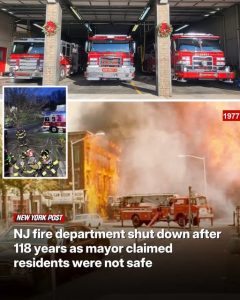
New Jersey Fire Department Shut Down After 118 Years as Mayor Said Residents Were Not Safe
After more than a century of service, a historic New Jersey fire department has been officially dissolved, ending an era that began in 1908 and prompting a heated debate over public safety, staffing, taxes and the future of the community it served.
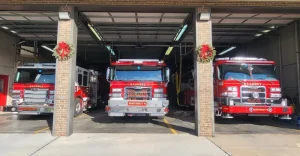
The Keasbey Fire Department in Woodbridge Township was officially shut down after the Township Council voted 8-1 on August 12, 2026, to dissolve the fire district and merge its responsibilities with the neighboring Fords Fire Company. The decision followed years of disagreement between township officials and the department over whether Keasbey had enough personnel and resources to provide an adequate emergency response. (New York Post)
For Mayor John McCormac, the central issue was straightforward: residents needed reliable fire protection, and he argued that the existing arrangement could not consistently provide it.
“We stressed that Keasbey residents were not currently safe with the situation that exists,” McCormac said during the council meeting, arguing that inadequate staffing could prevent firefighters from responding to structure fires with the numbers required for a safe and effective operation. He characterized the decision as a public-safety measure rather than an attempt to reduce expenses. (New York Post)
But firefighters and some residents strongly disagreed.
They argued that the department had continued to answer calls, maintain its equipment and provide around-the-clock coverage. Opponents of the closure also questioned the township’s description of the department’s workload and accused officials of failing to adequately involve the fire department and community in the process.
The dispute ultimately became about much more than the future of one firehouse.
It became a debate over what happens when a community institution with more than a century of history is judged against modern standards for emergency response.
A Fire Department Born From Tragedy
The history of the Keasbey Fire Department stretches back to June 1, 1908.
According to a petition organized by opponents of the closure, residents created Protection Fire Company No. 1 after a fire at the Ostrander Fire Brick Company exposed the community’s vulnerability. The residents decided that relying on others for protection was not enough and organized their own fire company. (Change.org)
What began with volunteers and basic firefighting equipment eventually developed into a modern department serving an industrial community.
Generations of firefighters followed the same basic mission: respond when someone called for help.
Over 118 years, the department became part of Keasbey’s identity. Firefighters did more than battle flames. They represented a local institution whose members knew the streets, businesses and residents they were sworn to protect.
That history was one of the strongest arguments made by opponents of the merger.
A petition opposing the closure gathered 1,452 signatures, with supporters emphasizing that generations of firefighters had protected the community since 1908. (New York Post)
For those residents, shutting down the department was not simply an administrative change.
It was the end of an institution that had survived for more than a century.
Why the Mayor Wanted the Department Closed
McCormac’s position centered on staffing.
According to the mayor, Keasbey had eight paid firefighters working rotating shifts. That staffing structure, he argued, made it difficult to consistently assemble the number of firefighters needed for a structure fire while also meeting response requirements.
The township had raised concerns about the department for years, and officials requested a state review in 2025. McCormac said a New Jersey Department of Community Affairs study ultimately supported pursuing a merger as the safest and most sustainable option. (News 12 – Default)
The mayor also argued that Keasbey lacked the same level of mutual-aid support available elsewhere in Woodbridge Township.
From his perspective, keeping a historic firehouse open was not enough. The department needed to be capable of putting an adequately staffed firefighting force on the scene when a serious emergency occurred.
That distinction is important.
Fire protection is not simply about having a building, a fire truck and firefighters available. A major structure fire can require multiple personnel performing different tasks simultaneously, including entering a building, operating hoses, handling ventilation, managing communications and providing safety support.
If a department cannot assemble enough personnel quickly, officials may have to depend on neighboring departments to fill the gap.
McCormac argued that this situation made Keasbey residents less safe than residents elsewhere in Woodbridge Township. (News 12 – Default)
The Department Disputed the Claims
Keasbey firefighters did not accept that assessment.
Department officials challenged statements about the number of calls the firehouse handled, arguing that its workload was greater than figures cited by township officials and the state report.
According to reporting on the dispute, department officials said Keasbey averaged approximately 16 calls per month over the preceding year, compared with the 10-to-12 monthly responses cited in the state report. The department also said it responded to 10 calls during the week ending August 12. (New York Post)
That disagreement became significant because call volume was part of the argument over whether maintaining a separate district was justified.
The department’s supporters contended that the firehouse was still actively serving residents and that its contribution could not be reduced to a simple calculation of calls per month.
They also pointed to the department’s history and its continuing investment in equipment.
A petition supporting the department noted that Keasbey had replaced an aging aerial ladder truck with a new Pierce 100-foot aerial ladder, describing the purchase as evidence that the department had continued adapting to modern firefighting needs. (Change.org)
The Firehouse Became Part of a Bigger Dispute
Another major source of controversy was the future of the firehouse property at 420 Smith Street.
Some department supporters alleged that development interests were connected to the effort to close the station.
Chief John Manna and other critics argued that concerns about the department intensified after a developer became interested in surrounding property. News 12 reported that firefighters believed the property could eventually be used for warehouse development. (News 12 – Default)
The department’s attorney, Howard Pashman, went further, arguing that the firehouse itself was effectively the remaining piece of a larger development puzzle.
Those allegations were disputed by the mayor.
McCormac has maintained that the closure was driven by public safety and not by development interests. He pointed to the history of staffing concerns and the state study as the reasons for pursuing the merger. (News 12 – Default)
That disagreement remains one of the most contentious aspects of the story.
For firefighters, the property question raised concerns about whether public safety was truly the only consideration.
For township officials, the accusation represented an attempt to distract from what they viewed as the central problem: the department’s ability to provide an adequate emergency response.
What Happens to the Firefighters?
The closure does not mean that Keasbey’s firefighters simply disappear.
The eight paid firefighters were allowed to retain their jobs and were to be reassigned elsewhere within Woodbridge Township. Volunteer firefighters also remain available to serve within the township’s broader emergency-response system. (New York Post)
That was an important point for McCormac.
He argued that the decision was not about eliminating firefighters or abandoning residents. Instead, it was about reorganizing resources so that personnel could be deployed through neighboring departments with greater staffing capabilities.
Opponents, however, said the transition raised questions about whether neighboring departments had actually been prepared to absorb the additional responsibility.
Those concerns were particularly significant for firefighters who had spent years building relationships within Keasbey.
A fire department is not just a collection of employees. In many communities, it is a social institution built around local knowledge, traditions and personal relationships.
That makes the closure emotionally difficult even if the new arrangement ultimately provides an equivalent or better emergency response.
Taxes Were Another Factor
Public safety was not the only issue discussed during the debate.
McCormac also pointed to the cost of maintaining the district.
He said Keasbey had the highest fire-district taxes in Woodbridge despite being the township’s smallest district and one with relatively few calls. According to the mayor, merging with Fords could save homeowners money, with the average homeowner potentially seeing about $1,000 less per year in fire-district taxes. (New York Post)
That argument gives the merger another dimension.
If officials believe residents can receive stronger emergency coverage while paying less, the case for consolidation becomes considerably more attractive from a municipal-management perspective.
But opponents may see the savings differently.
For them, reducing taxes cannot justify closing a local institution if the result could mean slower response times or less familiarity with the community.
The fundamental question is therefore not simply whether consolidation saves money.
It is whether the new system provides at least the same level of protection.
A Community Loses a Familiar Landmark
The historic Keasbey firehouse will now belong to the Fords Fire District, which will determine its future. McCormac said the Fords district will ultimately decide whether the building is sold. (New York Post)
That creates another emotional chapter in the story.
For more than a century, the firehouse represented something permanent.
Residents knew where it was. Firefighters reported there. Equipment was stored there. Generations of community members associated the building with protection and service.
Now that role has ended.
Even residents who accept the safety argument may feel a sense of loss.
Communities often measure their history through buildings, organizations and traditions. When one disappears, the change can feel much larger than the practical decision that caused it.
A Debate Reflecting a Larger Firefighting Problem
The Keasbey controversy also reflects a broader challenge facing fire departments across New Jersey and the United States: maintaining enough personnel.
Volunteer recruitment has become increasingly difficult in many communities, while training requirements, equipment costs and demands on firefighters continue to grow.
Earlier this year, the Lakehurst Volunteer Fire Department in New Jersey was temporarily shut down because of staffing problems, with neighboring departments responding to its calls while officials considered a permanent regional solution. Local officials acknowledged the broader decline in volunteer firefighters as part of the challenge. (News 12 – Default)
Keasbey’s situation is different because it had paid firefighters, but the underlying issue is similar.
Emergency services depend on people being available when emergencies happen.
A firehouse can have excellent equipment and a long history, but if there are not enough trained firefighters available at the right time, officials must consider alternatives.
That is the difficult reality confronting many small fire districts.
The End of One Era, the Beginning of Another
The dissolution of the Keasbey Fire Department closes a remarkable 118-year chapter.
It began in 1908 when local residents responded to a devastating lesson: their community needed organized fire protection.
For generations afterward, firefighters answered that call.
Now the community’s protection will be provided under a different structure.
Whether the merger ultimately produces faster response times, stronger staffing and lower costs—or whether residents eventually decide that something valuable was lost—will be judged by what happens in the years ahead.
For Mayor McCormac, the decision was ultimately about protecting people.
For the department’s supporters, the decision represented the loss of a historic institution that had continued serving its community.
Both perspectives point toward the same fundamental question: How can a community preserve its traditions while ensuring that its emergency services meet modern safety standards?
That question will not disappear with the closing of the Keasbey firehouse.
The trucks may move.
The firefighters may be reassigned.
The district may be dissolved.
But the community will continue to judge the decision by the most important measure of all: what happens when the next emergency call comes in.