U.S. Fired at Iranian Vessel That Approached Aircraft Carrier, Officials Say
Tensions between the United States and Iran reached another dangerous point in the Arabian Sea after an Iranian vessel approached the American aircraft carrier USS Abraham Lincoln and U.S. forces opened fire, according to two U.S. officials briefed on the incident. The officials spoke anonymously because they were not authorized to discuss the operation publicly. (CBS News)
The incident is significant because encounters between American and Iranian military forces at sea can escalate quickly. A large aircraft carrier such as the Abraham Lincoln operates with a protective strike group designed to detect and respond to potential threats long before they reach the carrier itself. When another military vessel moves unusually close, commanders must make rapid decisions about whether the approach is hostile, reckless, or simply part of an attempt to test the other side.
According to the officials cited by CBS News, the Iranian vessel sailed too close to the Abraham Lincoln earlier in the week. A U.S. Navy ship attempted to engage it using a 5-inch, 54-caliber Mark 45 naval gun. Several rounds were fired, but the shots reportedly missed the Iranian vessel. It remains unclear whether those initial shots were intended as warnings or were attempts to strike the ship directly. (CBS News)
The confrontation did not end there.
A military helicopter was subsequently launched and struck the Iranian vessel with two Hellfire missiles, according to the same officials. The exact American ship that fired the naval gun was not publicly identified, and officials also did not confirm which type of helicopter carried out the missile attack. Both Navy MH-60R Seahawk helicopters and Marine Corps AH-1Z Viper helicopters are capable of carrying Hellfire missiles, but there was no public confirmation of which aircraft participated. (CBS News)
Perhaps the most important unanswered question is what happened to the Iranian vessel and its crew.
At the time of the reporting, the status of the ship and the people aboard it was unknown. There was also no publicly confirmed accounting of casualties. That uncertainty makes it difficult to determine the full consequences of the encounter.
Why the Aircraft Carrier Matters
The USS Abraham Lincoln is one of the U.S. Navy’s Nimitz-class nuclear-powered aircraft carriers. It does not operate alone. Instead, it forms the centerpiece of a carrier strike group that includes guided-missile destroyers and other supporting vessels.
Among the destroyers operating with the Abraham Lincoln were the USS Spruance and USS Michael Murphy, although additional American guided-missile destroyers were also operating in the Arabian Sea. (CBS News)
An aircraft carrier represents an enormous concentration of military capability. Its aircraft can conduct surveillance, defensive operations and combat missions over large distances, while the ships accompanying the carrier provide layers of air, missile and surface protection.
That is why an unidentified or potentially hostile vessel approaching too closely can become a serious concern. The carrier’s commanders cannot afford to assume that an approaching vessel is harmless, particularly during an active military confrontation.
The reported incident therefore illustrates how quickly a maritime encounter can move from observation to weapons employment.
A Tense History of Encounters
This was not the first time Iranian forces had approached an American carrier during the broader period of heightened tensions.
Earlier in February, U.S. Central Command said an Iranian Shahed-139 drone had “aggressively” approached the Abraham Lincoln and maneuvered unnecessarily toward the carrier. An American fighter jet subsequently shot down the drone. That encounter occurred weeks before the wider U.S.-Iran war began, according to CBS News. (CBS News)
Such incidents are dangerous because military forces operating in close proximity have very little margin for error. A radar operator may interpret a maneuver differently from the crew of the approaching vessel. A warning may be misunderstood. A weapon may be fired accidentally. Or one side may deliberately test the other’s response.
The consequences of a mistake could be enormous.
An attack that kills sailors or damages a major warship could trigger retaliation, potentially turning a single encounter into a much larger military confrontation.
Conflicting Claims
The reported shooting also became part of a larger information battle surrounding the conflict.
Iranian officials and state-aligned outlets made separate claims about attacks involving the Abraham Lincoln. Some reports alleged that Iranian missiles or drones had struck the carrier and caused serious damage. Those claims circulated widely online, but researchers later documented how state-aligned Telegram accounts amplified allegations that the carrier had been severely damaged or forced to withdraw. (Open Measures)
The American account was substantially different: U.S. officials said American forces had fired at an Iranian vessel that came too close to the carrier.
That distinction is important.
A report that the United States fired on an Iranian ship is not the same thing as a report that Iran successfully attacked or disabled an American aircraft carrier. The two events can become confused when dramatic photographs, edited videos and sensational headlines circulate rapidly across social media.
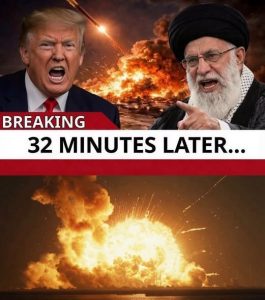
The image accompanying many online posts about the incident should therefore not automatically be treated as photographic evidence of what happened. Dramatic explosions or composite images can create an impression of events that may not correspond precisely to verified reporting.
The safest approach is to separate confirmed facts from speculation.
What Is Confirmed?
The most firmly reported details are relatively limited.
U.S. officials told CBS News that an Iranian vessel approached the Abraham Lincoln too closely. A U.S. Navy ship attempted to engage it with a 5-inch Mark 45 gun, with multiple shots reportedly missing. A helicopter then launched two Hellfire missiles that struck the Iranian vessel. The identity of the American firing ship and helicopter was not publicly confirmed, and the condition of the Iranian vessel and its crew remained unknown. (CBS News)
Those facts are serious enough without adding unverified details.
It is also important not to assume that every dramatic claim appearing online represents an independently confirmed military development. Researchers have documented how claims surrounding the Abraham Lincoln were repeatedly reposted and amplified by state-aligned media and online channels. (Open Measures)
A Dangerous Moment at Sea
The incident demonstrates why the Arabian Sea and surrounding waterways remain strategically sensitive.
American and Iranian forces have been operating in an environment where military aircraft, warships, drones and other vessels may encounter one another. Each side has powerful weapons, sophisticated surveillance systems and different interpretations of what constitutes a threat.
For the United States, protecting a carrier is an overriding priority. The carrier represents not only a major military asset but also a platform capable of supporting sustained air operations.
For Iran, operating naval forces near American ships can serve multiple purposes, including signaling, surveillance, deterrence and attempts to demonstrate that its forces remain capable of operating in contested waters.
That combination creates a volatile environment.
Even when neither side intends to begin a larger confrontation, a single encounter can produce consequences neither government originally planned.
What Happens Next?
The immediate consequences of the reported incident depend heavily on what happened to the Iranian vessel and whether Tehran chooses to respond.
If the vessel was damaged but the confrontation ends there, the incident could become another dangerous episode in an increasingly tense military relationship.
If Iranian forces respond with attacks against American ships, aircraft or personnel, however, the situation could escalate dramatically.
For now, the publicly available information leaves several questions unanswered. The precise identity of the Iranian vessel, the circumstances surrounding its approach, the identity of the American firing ship and helicopter, and the final condition of the Iranian crew all remain important pieces of the story.
What is clear is that the reported encounter was far more than an ordinary maritime incident. It involved American and Iranian military forces, a U.S. aircraft carrier, naval gunfire and Hellfire missiles.
And it is another reminder that in a region already facing intense military pressure, a few minutes at sea can carry consequences far beyond the ships involved.
The story also highlights why reliable sourcing matters during wartime. Dramatic headlines can spread faster than verified information, while images can be edited, reused or presented without context. The most responsible way to understand the incident is to distinguish what U.S. officials have actually confirmed from claims that remain unverified.
For now, the central fact remains stark: according to U.S. officials cited by CBS News, an Iranian vessel approached the USS Abraham Lincoln too closely, American forces opened fire, and a helicopter subsequently struck the vessel with two Hellfire missiles. The outcome for the Iranian ship and its crew was not publicly known at the time of the report. (CBS News)
In an already dangerous confrontation between Washington and Tehran, that encounter serves as a warning of just how quickly military tensions can turn into direct action—and how important it is for both sides to avoid miscalculation before the next encounter becomes even more serious.