‘The Shawshank Redemption’ Actor Dion Anderson Dies at 87 After a Decades-Long Career
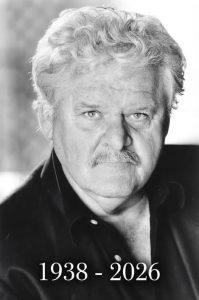
Dion Anderson, the veteran character actor remembered by movie audiences for his role in The Shawshank Redemption, has died at the age of 87. Anderson died peacefully on April 26, 2026, according to his published obituary. He was born on August 6, 1938, in Cameron County, Texas. (Dignity Memorial)
Although Anderson was not usually the headline star of the productions in which he appeared, his career was remarkably diverse. He worked in theater, television, film, education, broadcasting and international cultural projects before becoming a familiar character actor on American screens.
His passing marks the end of a career that stretched across several decades and included appearances in productions ranging from The Shawshank Redemption and Mr. Deeds to The X-Files, Gilmore Girls, Reba, Cold Case and numerous other television programs. (Suggest)
Remembered as Head Bull Haig
For many movie fans, Anderson’s most recognizable role was Head Bull Haig, a prison official in Frank Darabont’s acclaimed 1994 film The Shawshank Redemption.
The movie, adapted from Stephen King’s novella, became one of the most celebrated films of its era. Its central story follows Andy Dufresne, played by Tim Robbins, and his friendship with Ellis “Red” Redding, portrayed by Morgan Freeman, inside Shawshank State Penitentiary.
Anderson’s role was supporting rather than central, but that was characteristic of his career. He was the kind of performer who could enter a production and give an institution, workplace or community a believable sense of life.
That ability made him valuable to television producers and filmmakers.
A remarkable life before Hollywood
Anderson’s path to acting was anything but conventional.
According to his obituary, he first served in the U.S. Army Finance Corps. He then pursued an unusually extensive education, earning a bachelor’s degree in English literature and multiple master’s degrees, including studies in history, television production, economics and political science. He also earned a Master of Fine Arts degree from the London Academy of Music and Dramatic Art. (Dignity Memorial)
His professional life took him far beyond the American entertainment industry.
He taught Shakespeare in Florida and later worked with Voice of America, directing film and television programming. During the Vietnam War, he helped establish television facilities in South Vietnam and trained Vietnamese staff.
His work subsequently took him to Iran through the U.S. Foreign Service and State Department. There, he helped develop radio and television networks while also teaching English and producing plays and other cultural projects. (Dignity Memorial)
It was an extraordinary background for someone who would eventually become recognizable to millions of television and movie viewers.
Theater became an important part of his career
After completing his studies at the London Academy of Music and Dramatic Art, Anderson became a theater director in West Virginia.
His stage work included major classical and dramatic productions. His obituary specifically highlights performances associated with Shakespeare and Tennessee Williams, including Henry VIII and Cat on a Hot Tin Roof. (Dignity Memorial)
That theatrical foundation helps explain the versatility he later demonstrated on screen.
Anderson was not limited to one particular type of character. He could portray authority figures, professionals, community members and other supporting personalities without making them feel interchangeable.
A familiar face on television
While The Shawshank Redemption introduced him to an enormous movie audience, television was arguably where Anderson’s career became most extensive.
His credits included appearances on The X-Files, Home Improvement, Columbo, Matlock, The Golden Girls, Murphy Brown, Star Trek: Deep Space Nine, L.A. Law, Murder, She Wrote, Cold Case, Reba and Will & Grace. (PopCulture.com)
He also appeared on Gilmore Girls, playing Burt, a resident of Stars Hollow, in two episodes. That connection gave Anderson another memorable place in the television landscape.
His television career stretched from the early 1980s into the 2000s, making him part of the fabric of several generations of American television. (PopCulture.com)
More than just an actor
What makes Anderson’s life especially interesting is that acting represented only one chapter.
Before and alongside his entertainment work, he was an educator, broadcaster, theater professional and international cultural worker.
His academic achievements alone would have constituted a remarkable career. Instead, he continued moving between different fields.
That breadth of experience likely contributed to the authority he brought to many of his screen roles.
He had experienced military service, education, international work and theater before becoming a familiar face in Hollywood productions.
His work beyond Shawshank
Anderson also appeared in Adam Sandler’s 2002 comedy Mr. Deeds. His television credits included both dramatic and comedic productions, demonstrating the range expected of a dependable character actor. (Suggest)
He wasn’t necessarily the person audiences came to a theater specifically to see.
Instead, he was part of the supporting cast that helped make larger stories believable.
That contribution can be easy to overlook when discussing entertainment history, but character actors are often essential to the success of films and television programs.
They create the world around the principal characters.
A career built on versatility
Anderson’s career illustrates how much can happen away from the spotlight.
His name may not have had the instant recognition of a leading star, but his résumé reveals an extraordinary amount of professional experience.
He moved between stage and screen, education and broadcasting, America and overseas assignments.
His work also demonstrates the changing nature of the acting profession.
Character actors frequently build careers one role at a time. A television appearance might last only a few minutes, while a film role could involve only a handful of scenes. Yet those performances accumulate over decades.
Anderson’s career followed exactly that pattern.
His final years and family
Anderson died in Santa Paula, California, at 87. His obituary states that he is survived by his wife, Lucinda Anderson, along with his children, grandchildren and great-grandchildren. (Dignity Memorial)
His family described a life that extended well beyond entertainment.
The obituary also notes his interests in painting, music, nature and animals.
Those details offer a different picture of the man audiences saw on screen: not simply a prison official from The Shawshank Redemption, but a husband, father, grandfather, great-grandfather, artist and lifelong learner.
A funeral service was held in Santa Paula on May 11, 2026. (PopCulture.com)
Remembering the man behind the supporting roles
The death of a character actor can sometimes receive less attention than the passing of a major Hollywood star.
But Anderson’s career deserves recognition precisely because of its breadth.
He worked in some of the most recognizable productions of the past several decades, while simultaneously pursuing interests and professional responsibilities far beyond acting.
For Shawshank fans, he will always be associated with the imposing institutional world of Shawshank State Penitentiary.
For television viewers, he may be remembered from one of dozens of favorite programs.
For his family, friends and colleagues, however, his legacy was undoubtedly much larger than any individual screen credit.
Dion Anderson lived an unusually full professional life. From Texas to London, from military service and international broadcasting to Shakespearean theater and Hollywood productions, his journey covered an extraordinary range of experiences.
His death at 87 brings that journey to a close.
But the films and television programs in which he appeared remain, ensuring that his work will continue to be discovered by new audiences.
For millions who revisit The Shawshank Redemption, Anderson will remain one of the familiar faces who helped transform a fictional prison into a convincing world.
And that is one of the enduring strengths of a great character actor: even when the name isn’t immediately recognized, the face and performance can remain unforgettable.