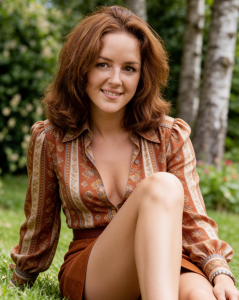
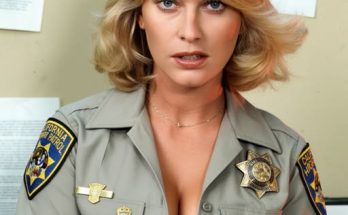
Name the Die Hard Star in This 1970 Portrait!
The actress is Bonnie Bedelia, the accomplished American performer whose intelligence, warmth, and understated strength helped make Die Hard (1988) far more than just another action movie. While Bruce Willis deservedly became an international superstar as wisecracking New York detective John McClane, Bedelia’s portrayal of Holly Gennero McClane gave the film its emotional heart. Calm under pressure, fiercely independent, and determined to protect her colleagues during the terrifying events at Nakatomi Plaza, Holly became one of the most memorable heroines of the action genre.
The 1970 portrait captures Bedelia at the beginning of what would become a remarkable career spanning more than six decades. Long before she found herself trapped in one of cinema’s greatest thrillers, she had already established herself as a gifted actress in theater, television, and film, earning the respect of audiences and critics alike.
A Performer from the Very Beginning
Bonnie Bedelia was born Bonnie Bedelia Culkin on March 25, 1948, in New York City. She grew up in a family that encouraged creativity, and from an early age it became clear that she possessed remarkable artistic talent.
Before acting became her full-time profession, Bedelia trained as a ballet dancer. Dance taught her discipline, poise, and expressive movement—qualities that later became evident in her screen performances. Although she eventually shifted her focus to acting, the confidence and grace she developed through ballet remained an important part of her style.
She attended New York’s prestigious High School of Performing Arts, where she honed her skills alongside many other aspiring performers. By her teenage years, she had already begun appearing professionally, demonstrating a maturity beyond her age.
Early Television Success
Like many young actors of her generation, Bedelia first found success on television.
One of her earliest major roles came on the long-running daytime drama Love of Life, where she quickly gained attention for her natural performances. Soap operas required actors to work at an extraordinary pace, memorizing large amounts of dialogue while filming almost daily.
The experience proved invaluable.
It sharpened her instincts, strengthened her professionalism, and prepared her for the demanding schedules of feature films.
During the 1960s and early 1970s she also appeared in numerous television dramas, steadily building a reputation as one of the industry’s most reliable young actresses.
Making Her Mark in Film
By the late 1960s, Bedelia was moving successfully into motion pictures.
One of her earliest acclaimed performances came in They Shoot Horses, Don’t They? (1969), Sydney Pollack’s powerful Depression-era drama about desperate contestants participating in a brutal dance marathon.
Although Jane Fonda received much of the attention, Bedelia’s work demonstrated her ability to hold her own among exceptional performers.
The film itself became one of the defining dramas of its era and introduced Bedelia to a much wider audience.
She followed it with a series of thoughtful performances that revealed remarkable versatility.
Unlike actresses who relied primarily on glamour, Bedelia built her reputation through emotional honesty and believable characters.
Building an Impressive Career
Throughout the 1970s and early 1980s, Bonnie Bedelia worked steadily across film, television, and theater.
She appeared in dramas, romances, thrillers, and literary adaptations, refusing to be limited to any single type of role.
Critics frequently praised her ability to communicate complex emotions with subtle facial expressions rather than dramatic speeches.
She became known as an actress who elevated every project through intelligence and authenticity.
Hollywood producers recognized that she brought credibility to even the most commercial productions.
That quality would become especially important when she accepted the role that would define her career.
Becoming Holly Gennero McClane
When Die Hard was released on July 15, 1988, audiences expected another entertaining action movie.
Instead, they received what many now consider the greatest action film ever made.
Bruce Willis starred as off-duty New York police officer John McClane, who arrives in Los Angeles hoping to reconcile with his estranged wife during her company’s Christmas party.
Moments later, terrorists led by the sophisticated Hans Gruber seize control of Nakatomi Plaza.
At the center of the crisis stands Holly Gennero.
Rather than portraying Holly as a helpless victim, Bedelia gave her remarkable strength and intelligence.
She remains composed during negotiations.
She protects her coworkers.
She refuses to reveal John’s identity as her husband until circumstances force the truth into the open.
Most importantly, she never loses her dignity.
Her calm determination perfectly balances McClane’s frantic heroics.
Chemistry That Felt Real
One reason Die Hard remains so beloved is the believable relationship between John and Holly.
Although separated at the beginning of the story, their affection for one another never disappears.
The marriage feels authentic because both characters are flawed.
John struggles with pride.
Holly struggles to balance career ambitions with family responsibilities.
Neither is presented as perfect.
Bedelia and Willis developed warm, natural chemistry that grounded the increasingly spectacular action sequences.
Their emotional reunion during the film’s conclusion feels genuinely earned because audiences have watched both characters grow throughout the story.
Standing Up to Hans Gruber
Alan Rickman’s Hans Gruber is widely regarded as one of cinema’s greatest villains.
His intelligence, sophistication, and ruthless confidence make him a formidable opponent.
Yet Holly refuses to be intimidated.
Even when Gruber discovers her connection to McClane, she maintains remarkable courage.
One of the film’s most satisfying moments comes near the conclusion when Holly punches the arrogant television reporter Richard Thornburg after he exploits her family for ratings.
The scene perfectly captures Holly’s strength.
She survives not because someone rescues her emotionally, but because she possesses resilience from beginning to end.
Returning for Die Hard 2
Bedelia reprised Holly McClane in Die Hard 2 (1990).
Although her role was smaller, audiences welcomed her return, and her scenes once again reinforced the emotional bond between the McClanes.
The sequel expanded Bruce Willis’s action credentials while allowing Holly to remain an important part of the series’ continuing story.
A Career Beyond Action Films
Although Die Hard became her signature role, Bonnie Bedelia continued building an impressive body of work.
She appeared in films including Presumed Innocent (1990), starring Harrison Ford, where she delivered another emotionally layered performance.
Television audiences also embraced her work.
She became especially well known as family matriarch Camille Braverman on the acclaimed NBC drama Parenthood (2010–2015).
Playing the loving grandmother of a sprawling modern family, Bedelia brought warmth, wisdom, humor, and compassion to the series.
A new generation of viewers discovered her remarkable talent through that role.
Respected by Colleagues
Throughout Hollywood, Bonnie Bedelia has earned admiration not only for her performances but also for her professionalism.
Directors frequently describe her as thoroughly prepared, collaborative, and generous toward fellow actors.
She has consistently avoided celebrity scandals, instead allowing her work to define her reputation.
This quiet professionalism has helped sustain a career lasting more than sixty years.
The Legacy of Holly McClane
Today, Holly Gennero McClane remains one of the finest female characters ever written for an action film.
At a time when many women in blockbuster movies existed simply to be rescued, Holly displayed intelligence, courage, leadership, and emotional depth.
Much of that success belongs to Bonnie Bedelia.
She understood that Holly’s strength lay not in fighting terrorists with weapons but in protecting others through courage, compassion, and unwavering self-control.
Without her grounded performance, Die Hard might have been merely an exciting thriller.
Instead, it became an emotionally satisfying story about family, forgiveness, and resilience.
More than three decades after its release, Die Hard continues to rank among the greatest action films ever made. While Bruce Willis, Alan Rickman, and the spectacular set pieces often receive the lion’s share of attention, Bonnie Bedelia’s contribution remains essential to the film’s enduring appeal. Her Holly McClane is smart without being arrogant, vulnerable without being weak, and courageous without ever seeming unrealistic.
Looking back at that youthful 1970 portrait, it’s remarkable to see an actress who had already laid the foundations of a distinguished career. Few could have predicted that she would one day become the emotional anchor of one of Hollywood’s most celebrated blockbusters. Yet Bonnie Bedelia accomplished exactly that, proving that sometimes the quietest performances leave the deepest and most lasting impression. Her work in Die Hard remains a masterclass in understated acting, ensuring that Holly McClane will forever stand alongside cinema’s greatest action heroes—not because she fired the biggest gun, but because she gave the story its heart.