U.S. Senate Grapples With Constitutional Clash After Controversial Venezuela Raid
The U.S. military operation that resulted in the capture and removal of Venezuelan President Nicolás Maduro has triggered one of the most consequential debates over presidential war powers in recent American history.
What began as a dramatic foreign-policy operation quickly became a constitutional dispute at home. At the center of the controversy is a fundamental question that has challenged presidents and Congress for generations: How much military authority can a president exercise without first receiving authorization from Congress?
The January 2026 operation in Venezuela brought that question into sharp focus. U.S. forces captured Maduro and his wife and transported them out of Venezuela, while the Trump administration defended the action as necessary to protect American interests and address alleged criminal and security threats. The operation immediately prompted questions from lawmakers and constitutional scholars about the legal basis for using military force on Venezuelan territory. (National Constitution Center)
The debate has since moved well beyond Venezuela itself. It has become a test of the separation of powers and the limits of executive authority.
A Raid That Changed the Debate
The operation was extraordinary not simply because it involved U.S. military forces entering another country, but because its target was the sitting Venezuelan president.
On January 3, 2026, American forces carried out the operation that resulted in Maduro’s capture. He was subsequently brought to the United States to face criminal proceedings. The extraordinary nature of the event immediately generated questions about international law, presidential authority, congressional oversight and the circumstances under which military force can be used without a formal declaration of war. (National Constitution Center)
For supporters of the operation, the raid represented decisive action against a government they regarded as hostile and a leader they accused of serious wrongdoing.
For critics, however, the central issue was not whether Maduro was popular or unpopular.
It was whether the president had the constitutional authority to order such an operation without congressional authorization.
That distinction became the heart of the Senate debate.
The Constitution Creates a Delicate Balance
The U.S. Constitution deliberately divides military authority between the executive and legislative branches.
The president serves as commander in chief, giving the executive branch substantial responsibility for military operations. Congress, meanwhile, has important powers over war, military funding and the legal framework governing armed conflict.
The arrangement was designed to prevent any single branch from possessing unlimited control over the nation’s military power.
But modern warfare has made the boundary increasingly complicated.
Presidents have repeatedly argued that they need the ability to respond quickly to threats without waiting for Congress to debate every military operation.
Congress, meanwhile, has periodically warned that emergency authority can become permanent authority if lawmakers fail to enforce their constitutional role.
The Venezuela operation placed that old disagreement under an unusually bright spotlight.
The War Powers Question
One of the central legal mechanisms in the debate is the War Powers Resolution of 1973.
The law was created after years of controversy surrounding presidential military actions, particularly during the Vietnam era. Its purpose was to strengthen Congress’s role when American forces become involved in hostilities.
Following the Venezuela operation, senators sought to use war-powers legislation to restrict further military action in Venezuela without congressional approval.
On January 8, 2026, the Senate voted 52–47 to advance a resolution intended to curb President Trump’s ability to conduct additional military action in Venezuela without authorization from Congress. Five Republicans joined Democrats in supporting the measure. (TIME)
That vote was significant.
It demonstrated that the disagreement was not strictly divided along party lines.
Some Republican senators also expressed concern about allowing the executive branch to undertake additional military operations without congressional involvement.
Supporters Defend Presidential Authority
The administration and its supporters have argued that the circumstances surrounding Venezuela required decisive presidential action.
From this perspective, the commander in chief needs sufficient flexibility to respond to national-security threats, particularly when intelligence and military conditions change rapidly.
Waiting for Congress to debate and vote before every operation could, supporters argue, compromise military effectiveness.
The administration has also emphasized the broader strategic context surrounding Venezuela, including allegations involving drug trafficking, organized crime and threats to U.S. security.
Supporters therefore view the operation as an exercise of presidential responsibility rather than an unconstitutional assumption of congressional power.
That argument has considerable historical precedent.
Presidents from both political parties have conducted military operations without obtaining a formal declaration of war from Congress.
The controversy is therefore not simply about one president.
It is about how far presidential authority should extend in the modern era.
Critics Warn of a Dangerous Precedent
Opponents see the issue differently.
Their concern is that allowing a president to launch major military operations against another country without clear congressional authorization could weaken one of the Constitution’s central safeguards.
If the president can determine that a foreign leader represents a security threat and then order military action without Congress, critics ask, what prevents future administrations from making increasingly broad interpretations of executive power?
That question becomes particularly important when the operation involves military force on foreign soil.
Constitutional scholars have offered sharply different interpretations of the legality of the Venezuela operation. Some argue that the president possessed sufficient authority under existing statutes and executive powers, while others have characterized the action as exceeding constitutional limits. (Just Security)
The disagreement demonstrates just how complicated the legal landscape has become.
The Senate Becomes the Battleground
The Senate’s involvement transformed an abstract constitutional question into a political confrontation.
Senators were forced to confront competing responsibilities.
On one side was the argument that America must have a strong executive capable of acting quickly in the face of international threats.
On the other was the argument that military force should remain subject to meaningful congressional control.
The January vote to advance the war-powers resolution was therefore about more than Venezuela.
It raised a much broader question:
Who ultimately decides when the United States goes to war—or engages in military hostilities that look increasingly like war?
The answer has enormous consequences for future presidents.
A Divided Political Landscape
The debate also exposed divisions within both major political parties.
Some Republicans who normally support a strong presidency nevertheless expressed concerns about allowing the executive branch to continue military action without congressional approval.
Meanwhile, Democrats generally argued that Congress had a constitutional responsibility to assert itself.
The unusual coalition behind the Senate vote demonstrated that war powers can produce political alliances that don’t always follow ordinary partisan patterns. Reuters reported that the January measure passed 52–47, with five Republicans joining Democrats. (Reuters)
But advancing a resolution and ultimately changing presidential behavior are two different things.
The Senate’s action faced additional procedural and political hurdles.
The broader conflict between Congress and the White House therefore remained unresolved.
The International Dimension
The constitutional debate cannot be separated from the international consequences.
A U.S. military operation that captures a foreign head of state inevitably raises questions about sovereignty and international law.
Critics of the raid argued that the United States cannot simply apply its domestic criminal laws inside another sovereign country without confronting international legal restrictions.
Supporters countered that the extraordinary circumstances surrounding Maduro justified the operation.
Those competing arguments are likely to remain part of the historical debate surrounding the raid.
The operation also dramatically altered Washington’s relationship with Venezuela.
Following Maduro’s removal, Vice President Delcy Rodríguez became central to Venezuela’s political transition, while Washington’s relationship with the Venezuelan government began shifting rapidly. By September 2026, Reuters reported that the United States had recognized Rodríguez’s government and that Venezuela’s political and economic relationship with Washington was undergoing major changes. (Reuters)
From Military Raid to Political Transformation
The consequences have extended beyond constitutional law.
Venezuela’s enormous oil reserves have made the country strategically important to Washington for decades. The post-Maduro period has created opportunities for increased economic cooperation, while also raising concerns about how American influence will shape Venezuela’s future.
Reuters reported in September that the United States was seeking greater access to Venezuela’s mineral resources, including gold, in addition to its oil interests. (Reuters)
At the same time, Washington has continued dealing with practical questions involving Venezuelan assets in the United States.
The future of Citgo, for example, has become part of the broader political transition. The U.S. Treasury Department moved on September 14 to prevent unauthorized changes in governance at Citgo and related U.S.-based companies while Venezuela’s political situation continues to evolve. (Reuters)
These developments show that the Venezuela operation was not an isolated military event.
It helped trigger a much larger geopolitical transformation.
Why the Constitutional Question Matters
The most important question may ultimately be what happens the next time an American president considers military action.
If Congress accepts broad presidential authority in the Venezuela case, future presidents could point to the episode as precedent.
If Congress successfully establishes new limits, future administrations could face greater pressure to seek legislative approval before conducting comparable operations.
Either outcome could reshape the balance of power between the White House and Capitol Hill.
The Constitution deliberately creates friction between the branches.
That friction can be frustrating during emergencies, but it also serves a purpose.
The system is designed so that major decisions involving national power are not supposed to belong entirely to one individual.
A Debate Far Bigger Than Maduro
Nicolás Maduro may have been the immediate subject of the military operation, but the constitutional argument is much bigger than one Venezuelan leader.
It concerns the future of American presidential power.
How much authority should a president possess during an international crisis?
When does a military operation become a war?
How quickly must Congress be consulted?
What constitutes sufficient authorization?
And who should determine whether the president has crossed the constitutional line?
These are difficult questions without simple answers.
The Senate’s response shows that lawmakers recognize the stakes.
The Venezuela operation has forced Washington to confront a question that has remained unresolved for generations: how to balance the need for decisive action with the constitutional requirement that military power remain accountable to the American people through their elected representatives.
Whatever the ultimate legal and political outcome, the debate is likely to outlast the headlines surrounding the raid itself.
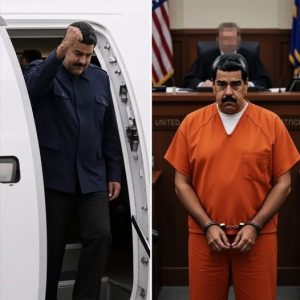
The real legacy of the Venezuela operation may not be the dramatic images of Maduro being transported to the United States.
It may be the constitutional argument that followed—and the precedent that future presidents and Congresses decide to make of it.