Trump and Xi Jinping Meet at the White House as Trade, Technology and AI Take Center Stage
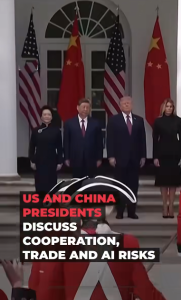
The White House became the setting for one of the most closely watched diplomatic meetings of 2026 as U.S. President Donald Trump welcomed Chinese President Xi Jinping to Washington. The two leaders discussed trade tensions, technology and the rapidly developing risks associated with artificial intelligence, while emphasizing that the United States and China still have areas where cooperation may be possible. Xi’s state visit is particularly significant because it marks his first visit to Washington in more than a decade.
The meeting comes at a complicated moment in the relationship between the world’s two largest economies. Washington and Beijing remain major competitors in trade, advanced technology and strategic affairs, but both governments also have strong economic reasons to prevent tensions from escalating into another prolonged confrontation.
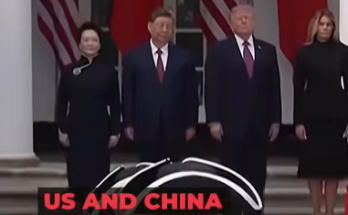
The symbolism surrounding Xi’s arrival was therefore important. Rather than treating the visit as an ordinary diplomatic appointment, the White House organized a major state welcome, including military honors and ceremonies. Trump had also personally greeted Xi when he arrived at Joint Base Andrews, underscoring the importance the administration placed on the visit. (CBS News)
A relationship balancing cooperation and competition
The Trump-Xi meeting illustrates the complicated nature of modern U.S.-China relations. The two countries compete intensely in several strategic areas, yet their economies remain deeply connected.
Trade has been one of the biggest sources of disagreement. Tariffs, agricultural purchases, rare-earth materials, industrial exports and technology restrictions have all become important parts of negotiations between Washington and Beijing.
Earlier agreements had produced some progress, but implementation remained uneven. The Associated Press reported before the summit that commitments involving agricultural products, Boeing aircraft, investment and other economic issues had not all moved forward at the same pace. (AP News)
That background made the White House meeting especially important. The two presidents were not starting negotiations from zero. Instead, they were attempting to manage a relationship that had already gone through significant periods of confrontation and negotiation.
Trade tensions remain a central issue
For American businesses and consumers, the outcome of U.S.-China trade discussions could have consequences well beyond government offices.
The United States and China are major participants in global supply chains. Products ranging from electronics and industrial equipment to agricultural commodities depend on the movement of goods between the two countries.
Tariffs can influence the cost of imported products, while restrictions on exports can affect manufacturers that rely on specialized components or raw materials.
One particularly important issue is rare-earth supplies. These minerals are essential for numerous modern technologies and industrial products. Washington has sought more predictable access to critical materials, while Beijing has used its position in strategic supply chains as an important element of its economic policy.
Reuters reported on September 24 that the two sides extended a trade truce that had been scheduled to expire in November, although the extension was described as lasting only two months. The extension provides additional time for negotiations but leaves major questions—including tariffs, Chinese purchases, rare-earth supplies and technology restrictions—unresolved. (Investing.com)
That means the summit produced an additional negotiating window rather than a comprehensive settlement of the trade relationship.
Artificial intelligence moves to the center of diplomacy
Perhaps the most consequential subject discussed by Trump and Xi is artificial intelligence.
AI has rapidly developed from a technology-sector issue into a national-security, economic and diplomatic issue. Both the United States and China are investing heavily in advanced AI systems and the computing infrastructure required to develop them.
The competition involves much more than chatbots. AI can influence manufacturing, medicine, transportation, scientific research, cybersecurity, defense systems and financial markets.
At the same time, governments and technology experts are increasingly discussing potential risks associated with highly capable AI systems.
That creates an unusual diplomatic challenge. Washington and Beijing may compete aggressively to maintain technological advantages while simultaneously recognizing that some AI-related risks cannot easily be contained within national borders.
Reports ahead of the summit indicated that the two governments had been discussing the possibility of mechanisms for communicating about AI risks. Analysts have noted that establishing practical safeguards would be difficult because both sides remain concerned about technology restrictions and strategic competition. (Los Angeles Times)
The discussion between Trump and Xi therefore represents an attempt to find common ground without ending the broader technological competition.
Technology restrictions remain difficult
Cooperation on AI does not mean the United States and China have abandoned their technology rivalry.
Washington has continued to place restrictions on certain advanced technologies and semiconductor-related capabilities because U.S. officials view some technologies as strategically significant.
Beijing, meanwhile, has sought to strengthen its domestic technological capabilities and reduce dependence on foreign suppliers.
This creates a difficult balance.
The United States wants to maintain its technological advantages while encouraging responsible development of AI. China wants continued access to international markets and technology while expanding its own technological independence.
Both governments therefore have incentives to communicate, but neither is likely to abandon its broader strategic objectives simply because the presidents held a high-profile meeting.
Why Xi’s Washington visit matters
Xi’s visit carries historical significance because it is his first state visit to Washington in more than a decade. The previous time he was hosted at the White House was during Barack Obama’s presidency in 2015. (The Guardian)
The long gap highlights how dramatically the relationship has changed.
The United States and China were already competitors in 2015, but the scale and intensity of their competition have increased substantially since then. Trade disputes, semiconductor restrictions, military tensions and disagreements over Taiwan have all become major components of bilateral relations.
The fact that Xi is now returning to Washington for a state visit sends a message that direct engagement remains important despite those disagreements.
It also provides both governments with an opportunity to demonstrate that competition does not necessarily have to eliminate diplomatic communication.
The importance of direct communication
One of the clearest themes surrounding the summit is the value of direct communication between the two leaders.
When relations between major powers deteriorate, misunderstandings can become dangerous. Regular communication gives governments an opportunity to explain their positions, clarify intentions and establish mechanisms for managing disputes.
Trump and Xi have already met several times during 2026, including Trump’s visit to China earlier in the year. The Council on Foreign Relations described the Washington meeting as another step in a series of high-level encounters between the two leaders. (Council on Foreign Relations)
That repeated contact does not eliminate disagreements, but it can provide channels for negotiation when tensions rise.
For Washington and Beijing, maintaining those channels may be particularly important as economic and technological competition becomes more complicated.
Taiwan remains an underlying concern
Although trade and AI received significant attention, Taiwan remains one of the most sensitive issues in U.S.-China relations.
Beijing regards Taiwan as part of China and strongly opposes moves that it believes could lead toward permanent separation. The United States maintains longstanding relationships with Taiwan while also maintaining its own policy framework concerning relations with Beijing.
Any major deterioration over Taiwan could have consequences extending far beyond the region, affecting global markets, supply chains and international security.
The summit therefore takes place against a much broader strategic background. Even when Taiwan is not the most visible subject of a public meeting, it remains one of the issues shaping the calculations of both governments.
A carefully managed state visit
The ceremonial aspects of Xi’s visit also attracted attention.
The White House prepared a formal arrival ceremony involving hundreds of U.S. service members, military music and displays of the American and Chinese flags. A military flyover was also planned as part of the welcome. (CBS News)
These ceremonies are designed to communicate the importance of the relationship while providing a highly controlled environment for diplomacy.
The visit also included activities involving the leaders’ spouses and a state dinner, adding a traditional diplomatic dimension to what is otherwise a meeting dominated by difficult economic and technological questions.
What comes next?
The most important question is what happens after the cameras leave Washington.
A presidential meeting can establish broad political direction, but detailed agreements generally require months of work by diplomats, trade officials, economic ministries and technical experts.
The reported two-month extension of the trade truce illustrates this reality. Instead of resolving every disagreement immediately, the leaders have created more time for negotiations. (Investing.com)
That period could be used to address tariffs, agricultural purchases, rare-earth supplies, technology restrictions and other economic issues.
AI discussions may also continue through government and technical channels. The challenge will be turning broad statements about cooperation into practical mechanisms for communication and risk management.
A significant moment, but not the end of rivalry
The Trump-Xi meeting demonstrates that cooperation and competition can exist simultaneously.
The United States and China continue to have substantial disagreements over trade, technology and strategic affairs. At the same time, their leaders recognize the economic and international consequences of allowing those disagreements to spiral without diplomatic communication.
The Washington summit therefore should be viewed as part of an ongoing process rather than a final resolution of U.S.-China tensions.
Xi’s first White House visit in more than a decade provides a powerful symbol of renewed high-level engagement. Trump and Xi have demonstrated that they are willing to sit across the table and discuss difficult issues even while their governments continue to compete.
For businesses, technology companies, investors and governments around the world, the immediate focus will be on whether the renewed dialogue produces concrete agreements.
For the broader international community, the AI discussions may prove especially significant. Artificial intelligence is developing quickly, and decisions made today could influence how governments manage powerful technologies for years to come.
The central message from Washington is therefore one of cautious engagement: the United States and China remain competitors, but both leaders have acknowledged that cooperation is possible in areas where their interests overlap.
Whether that cooperation can be sustained will depend not only on the personal relationship between Trump and Xi, but also on the ability of their governments to turn diplomatic conversations into durable agreements. (reuters.com)