NAME THE 1978 STUNTMAN COMEDY WITH THE HOLLYWOOD DAREDEVIL CHARM!
Released on this day in 1978, Hooper raced into theaters with roaring engines, spectacular stunt work, effortless humor, and the magnetic charisma of one of Hollywood’s biggest stars. More than just an action-comedy, the film celebrated the unsung heroes of the movie business—the fearless stunt performers who risked injury every day to create unforgettable cinematic thrills. Led by Burt Reynolds at the height of his popularity and featuring the radiant Sally Field, Hooper became a crowd-pleasing tribute to old-school Hollywood adventure while also reflecting the easygoing charm that defined so many late-1970s blockbusters.
At the center of the story is Sonny Hooper, played by Burt Reynolds, a veteran stuntman whose body bears the scars of decades spent crashing cars, falling from buildings, jumping motorcycles, and surviving explosions. Once considered the best in the business, Hooper now finds himself facing a difficult reality. His injuries are catching up with him, younger performers are eager to take his place, and friends begin wondering whether it’s finally time for him to retire.
Rather than quietly stepping away, Hooper is determined to prove that he still has what it takes. When an opportunity arises to perform one final spectacular stunt—a seemingly impossible rocket-powered car jump—he throws himself into the challenge with characteristic confidence, even as those closest to him worry about the risks involved.
The role could hardly have been more perfectly suited to Burt Reynolds. By 1978, Reynolds had become one of the most bankable stars in the world. His combination of rugged masculinity, quick wit, and relaxed Southern charm made him enormously popular with audiences. Hits such as Deliverance, The Longest Yard, Smokey and the Bandit, and Semi-Tough had firmly established him as Hollywood’s leading box-office attraction.
Unlike many action stars, Reynolds rarely took himself too seriously. His trademark grin, playful humor, and self-deprecating personality made him especially appealing, and Hooper allowed him to showcase all of those qualities while paying tribute to a profession he deeply respected.
Adding emotional warmth to the story is Sally Field, who plays Gwen Doyle, Hooper’s supportive and intelligent girlfriend. Rather than simply serving as a romantic interest, Gwen provides the emotional grounding that balances the film’s action-packed spectacle. She cares deeply about Hooper but also recognizes the physical toll his dangerous profession has taken on him.
Field and Reynolds shared remarkable chemistry on screen, a chemistry that extended beyond the cameras. During the filming of Smokey and the Bandit and Hooper, the pair became one of Hollywood’s most talked-about real-life couples. Their relationship fascinated fans and entertainment reporters alike, making every film they appeared in together even more appealing to audiences.
One of the film’s greatest strengths lies in its affectionate portrayal of the stunt profession. Long before computer-generated imagery became common, action movies depended on highly skilled performers willing to execute dangerous physical feats. These professionals often received little public recognition despite playing a crucial role in creating movie magic.
Director Hal Needham understood that world better than almost anyone.
Before becoming a filmmaker, Needham enjoyed an extraordinary career as one of Hollywood’s most accomplished stuntmen. Over several decades, he doubled for major stars, performed breathtaking action sequences, and helped revolutionize stunt coordination. His close friendship with Burt Reynolds made Hooper an especially personal project.
Needham filled the movie with authentic details drawn from real stunt work. The camaraderie among performers, the physical demands of the profession, the constant risk of injury, and the pride stunt professionals took in their work all reflected his firsthand experience.
The supporting cast further strengthened the film. Legendary actor Brian Keith delivered an engaging performance as Cappy, Hooper’s longtime mentor and fellow stuntman. Their friendship provides many of the movie’s funniest moments while also highlighting the loyalty shared among members of the stunt community.
Another memorable performance came from Jan-Michael Vincent, who portrayed Ski, a talented young stuntman eager to establish himself. His arrival introduces friendly rivalry as the experienced Hooper confronts the realization that younger performers are beginning to challenge his legendary reputation.
Rather than creating hostility between generations, the film explores themes of mentorship and respect. Hooper recognizes Ski’s talent while struggling with his own desire to remain at the top of his profession. Their relationship adds emotional complexity to what might otherwise have been a straightforward action comedy.
Of course, audiences primarily came for the spectacular stunts—and Hooper delivered in spectacular fashion.
The film features high-speed car chases, dramatic crashes, falls from great heights, helicopter sequences, and numerous practical effects, all performed without modern computer-generated imagery. Every jump, collision, and explosion required careful planning, extraordinary precision, and exceptional courage.
The climactic rocket-powered car jump remains one of the film’s defining sequences. Combining suspense, excitement, and impressive practical stunt work, the finale perfectly captures the adventurous spirit that made the movie so entertaining.
Although action dominates much of the running time, Hooper also offers a surprisingly thoughtful reflection on aging and identity. Sonny Hooper is not simply fighting younger rivals; he is confronting his own mortality. Years of broken bones, surgeries, and physical punishment have left lasting scars, forcing him to ask whether true courage sometimes means knowing when to step away.
This emotional depth helped distinguish Hooper from many other action-comedies of its era.
The film also affectionately pokes fun at Hollywood itself. Egotistical actors, demanding directors, impossible schedules, and chaotic film productions provide endless opportunities for comedy. Through Hooper’s eyes, viewers glimpse the often-overlooked world behind the camera where stunt performers quietly create many of cinema’s most memorable moments.
Upon its release, Hooper proved to be another commercial success for Burt Reynolds. Audiences embraced its winning combination of humor, romance, and thrilling action, while critics praised the authenticity of its stunt sequences and the easy chemistry among its cast.
Although the film arrived during a decade filled with memorable action pictures, Hooper occupied a unique place by making stunt performers—not superheroes or police officers—the true heroes of the story.
Over the years, the movie has developed a loyal following among classic film fans. Many viewers regard it as one of the finest celebrations ever made about the stunt profession, while others simply enjoy it as a quintessential Burt Reynolds adventure packed with charm and excitement.
Today, Hooper also serves as an important reminder of how action filmmaking has evolved. Before digital effects transformed Hollywood, filmmakers relied on practical stunt work requiring tremendous skill, preparation, and bravery. Every spectacular sequence carried genuine physical risk, making the achievements of those performers all the more remarkable.
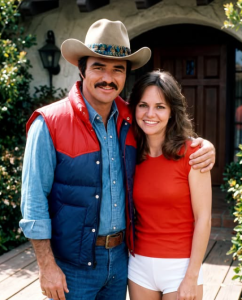
Looking back, the promotional images of Burt Reynolds in his cowboy hat alongside Sally Field perfectly capture the spirit of late-1970s entertainment. Their relaxed confidence, natural chemistry, and undeniable charisma embodied an era when audiences flocked to theaters for exciting, character-driven adventures led by genuine movie stars.
The partnership between Reynolds and Field remains one of Hollywood’s most beloved screen pairings. Their warmth and playful rapport elevated every scene they shared, giving Hooper an emotional heart that complemented its spectacular action.
More than four decades after its release, Hooper continues to entertain new generations of viewers. Its thrilling practical stunts, engaging performances, and affectionate tribute to Hollywood’s daredevils ensure its lasting appeal. For fans of classic action-comedies, it remains an enduring reminder of a time when movie magic depended not on computer graphics, but on the extraordinary courage of the men and women willing to risk everything for the perfect shot.
Released on this day in 1978, Hooper stands as both an exhilarating action-comedy and a heartfelt salute to the stunt performers whose fearless work has thrilled audiences for generations. With Burt Reynolds at his charismatic best, Sally Field bringing warmth and sparkle, and Hal Needham honoring the profession he loved, the film remains one of the most enjoyable and affectionate tributes ever made to Hollywood’s unsung heroes.