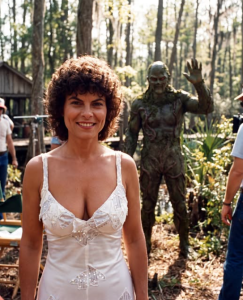
NAME THE 1982 DC CREATURE FEATURE THAT CRAWLED OUT OF THE MARSH!
🌿 Opened in New York on this day in 1982, Swamp Thing brought one of DC Comics’ most unusual heroes to the big screen. Directed by future horror legend Wes Craven, the film blended science fiction, horror, romance and comic-book adventure into a low-budget cult classic that has remained a favorite among genre fans for more than four decades.
Long before comic-book movies dominated Hollywood, Swamp Thing proved that superheroes didn’t have to wear capes or soar through the skies. Instead, its unlikely hero emerged from the murky waters of a Louisiana swamp—a tragic scientist transformed into a towering plant creature whose humanity remained intact beneath layers of moss, vines and bark.
Today, the film is remembered as one of the earliest serious attempts to adapt a DC Comics property for the big screen, arriving years before the modern era of superhero cinema.
From Comic Book to Cult Film
Swamp Thing first appeared in DC Comics in 1971, created by writer Len Wein and artist Bernie Wrightson. The character quickly stood out from traditional superheroes. Rather than possessing flashy powers or a glamorous costume, Swamp Thing was a tragic figure—part monster, part man—who struggled to reconcile his humanity with his terrifying new appearance.
His stories mixed horror, environmental themes, science fiction and gothic romance, making him one of DC’s most distinctive creations.
By the early 1980s, producer Michael Uslan—who would later help bring Batman to the big screen—believed Swamp Thing could become an exciting feature film.
To direct it, he turned to Wes Craven, already respected for his groundbreaking horror films The Last House on the Left and The Hills Have Eyes.
The Story
The film follows brilliant government scientist Dr. Alec Holland, who is working on a revolutionary bio-restorative formula deep within the Louisiana bayou.
The project attracts the attention of ruthless businessman Anton Arcane, who intends to steal Holland’s research for his own gain.
After Arcane’s mercenaries attack the laboratory, Holland is doused in his experimental chemicals before stumbling into the swamp.
Rather than dying, the mysterious mixture transforms him into a towering humanoid creature composed entirely of plant matter.
Although physically monstrous, Alec retains his intelligence, compassion and determination to protect both the swamp and those he loves.
Thus, Swamp Thing is born.
Dick Durock Becomes the Monster
Bringing Swamp Thing to life required actor Dick Durock to spend hours inside an elaborate practical makeup suit.
Long before digital visual effects became commonplace, the production relied on prosthetics, foam latex, makeup and clever cinematography to create the character.
The result remains remarkably effective.
Durock’s performance emphasizes quiet dignity rather than brute force.
His Swamp Thing isn’t simply a monster.
He’s a tragic hero.
His gentle movements, expressive eyes and restrained physical performance help audiences sympathize with a character whose face is almost entirely concealed.
That emotional depth became one of the film’s greatest strengths.
Adrienne Barbeau as Alice Cable
The smiling actress in this behind-the-scenes photograph is Adrienne Barbeau, who plays government agent Alice Cable.
Already well known to horror fans through films such as The Fog and later Escape from New York, Barbeau brought intelligence, warmth and determination to the role.
Alice arrives at Holland’s laboratory shortly before the attack and soon finds herself pursued by Arcane’s forces while discovering that the mysterious creature protecting her is actually Alec Holland.
Rather than reacting with fear alone, Alice gradually recognizes the humanity hidden beneath Swamp Thing’s frightening exterior.
Her growing emotional connection with Alec gives the story surprising tenderness.
The romance between Alice and Swamp Thing remains one of the film’s most memorable elements.
Louis Jourdan’s Villainous Arcane
French actor Louis Jourdan portrays the sophisticated yet ruthless Anton Arcane.
Unlike many comic-book villains, Arcane relies more on intelligence and manipulation than physical strength.
His obsession with obtaining Holland’s bio-restorative formula drives every conflict in the story.
Jourdan’s refined performance provides an effective contrast to the earthy, silent presence of Swamp Thing.
Their battle ultimately becomes one of science versus greed, humanity versus corruption.
Wes Craven’s Unique Vision
Although Wes Craven would later become world-famous for A Nightmare on Elm Street and Scream, Swamp Thing occupies a fascinating place in his career.
Rather than delivering relentless horror, Craven approached the material as an adventure infused with gothic atmosphere.
The Louisiana swamp becomes almost a character itself.
Towering cypress trees.
Misty waters.
Dense vegetation.
Hidden laboratories.
Moonlit waterways.
The environment creates a mysterious world where science fiction and fairy tale coexist.
Craven balances action with moments of quiet reflection, allowing the audience to appreciate the melancholy at the heart of Alec Holland’s transformation.
Practical Effects That Still Impress
One reason Swamp Thing continues to charm audiences is its reliance on practical filmmaking.
Every transformation, creature effect and action sequence was created without computer-generated imagery.
Dick Durock’s detailed costume remains particularly impressive considering the modest budget.
The makeup team crafted a believable living plant creature using layers of latex, sculpted vines, painted textures and carefully designed facial appliances.
While modern audiences may notice the limitations of early-1980s effects, many fans find their tangible realism far more engaging than excessive digital imagery.
A Blend of Genres
Swamp Thing refuses to fit neatly into a single category.
It combines:
- Superhero adventure
- Science fiction
- Horror
- Romance
- Environmental fantasy
- Action
That unusual mixture helps explain why the film gradually developed such a devoted cult following.
It’s neither a straightforward monster movie nor a conventional superhero film.
Instead, it occupies its own wonderfully strange corner of genre cinema.
Critical Reception
Upon release in 1982, reviews were mixed.
Some critics praised Craven’s imagination and the film’s sincerity.
Others found the limited budget occasionally visible on screen.
Commercially, it performed modestly, but home video helped introduce Swamp Thing to a much larger audience throughout the 1980s.
Cable television further cemented its reputation among young viewers discovering creature features and comic-book adventures.
Over time, appreciation steadily grew.
Many now regard it as one of the better superhero adaptations of its era.
The Legacy
The popularity of the film led to a 1989 sequel, The Return of Swamp Thing, which embraced a much more comedic tone.
The character also inspired two live-action television series and numerous animated appearances.
Meanwhile, the comic books evolved dramatically under writer Alan Moore during the 1980s, transforming Swamp Thing into one of the most critically acclaimed titles in comic-book history.
Moore expanded the mythology, exploring philosophy, ecology and horror in ways that influenced generations of writers.
Although Craven’s film predates those celebrated stories, it helped keep the character in the public eye.
Adrienne Barbeau’s Enduring Genre Legacy
For Adrienne Barbeau, Swamp Thing became another beloved entry in an already impressive genre résumé.
Having starred in classics including The Fog, Escape from New York, Creepshow and numerous television productions, she became one of horror and science fiction’s most recognizable faces.
Her portrayal of Alice Cable remains one of her favorite performances among fans, thanks to the character’s courage, intelligence and genuine compassion.
The relaxed behind-the-scenes photograph of Barbeau smiling beside Dick Durock—still fully suited as Swamp Thing—perfectly captures the spirit of the production.
Despite the intimidating appearance of the creature, the image reminds audiences that movie magic is built on collaboration, creativity and a great deal of patience beneath layers of prosthetic makeup.
Why It Still Matters
More than forty years after its theatrical debut, Swamp Thing continues to occupy a special place in comic-book movie history.
It arrived decades before interconnected cinematic universes, billion-dollar superhero blockbusters and sophisticated visual effects became the norm.
Instead, it relied on imaginative storytelling, memorable performances, practical craftsmanship and genuine affection for its comic-book source material.
Its themes of environmental responsibility, scientific ethics, identity and redemption remain surprisingly relevant, while its blend of monster-movie thrills and heartfelt romance gives it a timeless charm.
For fans of classic horror, vintage comic-book adaptations and practical effects, Swamp Thing remains a rewarding revisit—a reminder that some of cinema’s most memorable heroes don’t wear masks or capes. Sometimes, they emerge quietly from the swamp, covered in moss and vines, protecting the natural world from those who would exploit it.
So if you recognized this cheerful behind-the-scenes image, the answers are Swamp Thing (1982), starring Adrienne Barbeau as Alice Cable alongside Dick Durock as the legendary DC Comics hero Swamp Thing—a wonderfully eccentric cult classic that helped pave the way for future comic-book films while earning its own enduring place in genre movie history.