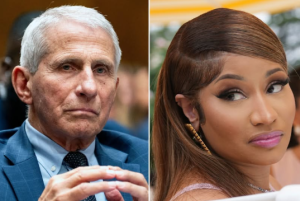
Nicki Minaj Blasts Anthony Fauci in Mock Diary Video After Senate Testimony
Rapper Nicki Minaj has reignited her long-running criticism of former White House COVID-19 adviser Dr. Anthony Fauci, posting a satirical video and a series of social media messages following Fauci’s recent appearance before the Senate Homeland Security and Governmental Affairs Committee. The posts have quickly spread online, drawing praise from some supporters while prompting sharp criticism from others, once again highlighting the deep divisions that remain over the U.S. response to the COVID-19 pandemic.
The latest exchange comes years after Minaj first became a polarizing voice in pandemic debates. During the height of COVID-19, she questioned vaccine policies and public health messaging on social media, generating widespread attention and responses from government officials, medical experts and fellow entertainers. Her newest comments suggest that those disagreements have not faded.
A Satirical “Diary” Video
On Friday, Minaj shared a video in which she impersonated Dr. Fauci as though he were writing in a personal diary. Speaking in a deliberately exaggerated voice, she joked about his public profile before shifting into pointed criticism of his leadership during the pandemic.
The parody included sarcastic lines suggesting Fauci believed himself to be more famous than celebrities and then turned to accusations about the social consequences of pandemic-era policies. Minaj criticized school disruptions, isolation experienced by older adults and what she characterized as the treatment of people who questioned official COVID-19 guidance.
The video was clearly intended as satire, but it also reflected Minaj’s broader political and cultural criticism of pandemic restrictions and public health messaging.
The Timing
Minaj released the video shortly after Fauci testified before a Senate committee investigating aspects of the government’s response to COVID-19.
The hearing, chaired by Senator Rand Paul of Kentucky, examined issues including the origins of the coronavirus, federal research funding and decisions made during the pandemic.
During questioning, Fauci invoked his Fifth Amendment right against self-incrimination numerous times, a move that immediately became a major political story and fueled extensive public debate.
Supporters of the hearing argued that difficult questions deserved answers.
Critics countered that the proceedings were politically motivated and that invoking constitutional rights should not, by itself, be interpreted as an admission of wrongdoing.
The Pandemic Diaries
The hearing followed the release of more than 1,100 pages of Fauci’s pandemic-era journals by Senator Rand Paul.
The journals describe Fauci’s meetings, observations and experiences during one of the most challenging periods in modern public health.
Some entries discuss his unexpectedly high public profile during the pandemic and interactions with political leaders, including then-President Donald Trump.
Supporters of the release argue that the diaries provide insight into government decision-making.
Others caution that excerpts can be interpreted differently depending on context and emphasize the importance of reading the material in full.
Minaj’s Broader Criticism
Beyond the parody video, Minaj posted additional comments criticizing COVID-19 booster recommendations and reflecting on the pandemic years.
She argued that repeated booster guidance confused many people and expressed sympathy for followers who said they regretted vaccination decisions made during periods of employment or social pressure.
Responding to one supporter who described feeling forced to receive a vaccine to keep a job, Minaj encouraged compassion rather than self-blame and expressed hope that people would recover from the emotional stresses associated with the pandemic.
These remarks are consistent with positions she has expressed since 2021, when she became one of the entertainment industry’s most outspoken critics of some COVID-19 policies.
Public Reaction
As often happens with Minaj’s social media activity, reactions were sharply divided.
Supporters praised her willingness to criticize government officials and challenge mainstream narratives.
Some commenters thanked her for continuing to raise questions they believe have not been fully addressed.
Others strongly disagreed.
Critics argued that public health policy should be guided by scientific evidence and expressed concern that celebrities discussing medical issues may contribute to confusion about health information.
The online debate quickly spread across multiple platforms, with thousands of users sharing clips from the parody and debating Fauci’s legacy.
A Long-Running Feud
Minaj’s latest comments are not the beginning of her disagreements with Fauci.
The two became indirectly linked during the COVID-19 pandemic after Minaj questioned vaccine requirements and shared claims that attracted enormous public attention.
At the time, Fauci and other public health officials publicly encouraged people to rely on verified medical evidence rather than anecdotal reports when making vaccination decisions.
Although the direct exchanges between them were limited, Minaj has continued referencing Fauci in interviews and on social media over the years whenever debates surrounding pandemic policy re-emerge.
Fauci’s Legacy Remains Divisive
Few public officials became as recognizable during the pandemic as Dr. Anthony Fauci.
As director of the National Institute of Allergy and Infectious Diseases, he served as one of the federal government’s leading scientific advisers throughout multiple presidential administrations.
To many Americans, Fauci became a trusted public health voice during an unprecedented crisis.
To others, he became closely associated with lockdowns, mask guidance and other policies they opposed.
Those contrasting perspectives continue to shape discussions about his role years after the most severe phase of the pandemic.
Celebrity Influence in Political Debate
Nicki Minaj’s latest posts also highlight the growing role celebrities play in political and social conversations.
With hundreds of millions of followers across social media platforms, entertainers often reach audiences comparable to major news organizations.
That visibility gives celebrities tremendous influence but also places their comments under intense scrutiny.
Supporters argue that public figures have every right to express opinions on matters affecting society.
Critics respond that large platforms also carry responsibility, particularly when discussing subjects related to science and public health.
The Importance of Distinguishing Opinion from Fact
The renewed debate surrounding Minaj’s video illustrates why distinguishing between verified facts, personal opinions and satire is essential.
Her parody reflects her own views and criticisms rather than established factual findings.
Likewise, the Senate hearing included allegations and disputes over pandemic policy that continue to be debated politically and legally. Some claims remain contested, and interpretations of Fauci’s testimony vary significantly depending on the source.
For readers following these developments, consulting primary documents—such as the Senate hearing record—and reporting from multiple credible sources can provide broader context.
What’s Next?
Whether Minaj’s latest criticism leads to any direct response from Fauci remains unclear. As of the latest reporting, Fauci has not publicly commented on her parody video or accompanying social media posts.
The episode nevertheless demonstrates that the political and cultural debates surrounding COVID-19 remain highly emotional years after the pandemic’s peak. Questions about government decision-making, public trust, individual freedoms and scientific communication continue to generate passionate discussion across the political spectrum.
For Nicki Minaj, the video represents another chapter in her long-running willingness to challenge prominent public figures and engage directly with controversial issues. For Anthony Fauci, it is another reminder that his central role during the pandemic continues to shape public debate long after he left government service.
As conversations about the pandemic’s legacy continue, the latest exchange underscores a broader reality: COVID-19 remains not only a defining public health event but also a lasting cultural and political flashpoint. Public figures from entertainment, science and politics continue to influence how that period is remembered, debated and interpreted, ensuring that discussions about the pandemic are likely to remain part of the national conversation for years to come.