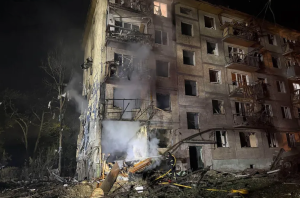
Russian and Ukrainian Strikes Kill 14 on Both Sides as Fighting Intensifies
The war between Russia and Ukraine has once again taken a deadly toll on civilians and military personnel alike, as overnight missile, drone, and artillery attacks reportedly killed at least 14 people across both countries. The latest exchange of strikes underscores the continuing intensity of a conflict that has now stretched well beyond three years, with neither side showing signs of backing away from military operations.
According to officials from both Russia and Ukraine, the attacks targeted multiple locations, damaging residential buildings, infrastructure, and public facilities. Emergency crews worked throughout the night and into the following morning to rescue survivors, extinguish fires, and search through damaged structures for anyone who might still be trapped.
While each side accuses the other of launching indiscriminate attacks, independent verification of every claim remains difficult because of the ongoing fighting.
Overnight Attacks Across Multiple Regions
The latest wave of violence involved a combination of drones, missiles, and artillery fire.
Ukrainian authorities reported that several cities came under aerial attack during the night, forcing residents to seek shelter as air-raid sirens echoed across affected regions. Explosions were reported in both urban and rural areas, with emergency responders quickly dispatched to damaged neighborhoods.
At the same time, Russian officials said Ukrainian drones and other long-range weapons struck locations inside Russian territory, causing casualties and damage to civilian infrastructure.
Both governments released casualty figures and photographs showing destroyed buildings, damaged vehicles, shattered windows, and emergency personnel responding to the aftermath.
Civilian Areas Among the Hardest Hit
Many of the reported attacks affected residential neighborhoods.
Images released by emergency services showed apartment buildings with blown-out windows, collapsed balconies, and debris scattered across streets. Firefighters battled blazes sparked by explosions while rescue workers searched damaged structures for survivors.
Authorities said several of the fatalities occurred inside residential buildings, highlighting the continued danger civilians face even far from active front-line combat.
Families were forced to evacuate homes that had become structurally unsafe, while nearby residents gathered outside awaiting permission to return.
Casualties Reported on Both Sides
Officials reported that a combined total of at least 14 people were killed during the latest exchange of attacks.
In addition to those who lost their lives, numerous others were injured, with hospitals treating victims suffering from blast injuries, burns, cuts from shattered glass, and other trauma.
Medical teams remained on standby as authorities continued searching affected areas, warning that casualty numbers could change if additional victims were discovered beneath debris.
Because information during wartime develops rapidly, official casualty figures are often updated as rescue operations continue.
Emergency Response Efforts
Emergency services in both countries launched extensive rescue operations shortly after the attacks.
Firefighters worked to contain fires threatening nearby buildings, while engineers evaluated structural damage to determine whether apartment complexes could safely remain occupied.
Medical personnel established treatment areas near several impact sites before transporting seriously injured victims to hospitals.
Heavy equipment was also brought in to remove debris and assist rescue teams searching damaged buildings.
Authorities praised first responders who worked through dangerous conditions to assist survivors despite continuing security concerns.
Air Defense Systems Activated
Both Russia and Ukraine reported activating air-defense systems during the attacks.
Military officials said numerous incoming drones and missiles were intercepted before reaching their intended targets.
However, officials acknowledged that some projectiles penetrated defensive systems and struck populated areas.
Throughout the conflict, both countries have invested heavily in expanding their air-defense capabilities, but no system is capable of intercepting every incoming threat.
As attacks become increasingly complex, involving large numbers of drones alongside missiles, defending against every projectile has become more challenging.
Continued Use of Drone Warfare
The latest attacks once again highlighted the growing importance of drones in modern warfare.
Both Russia and Ukraine have increasingly relied on unmanned aerial vehicles for surveillance, reconnaissance, and precision strikes.
Compared with traditional aircraft, drones are often less expensive, can be deployed rapidly, and may overwhelm air-defense systems when launched in large numbers.
Military analysts say drone technology has fundamentally changed the battlefield since the conflict began.
Each side continues developing new tactics designed to improve both offensive operations and defensive countermeasures.
Humanitarian Impact
Beyond the immediate casualties, repeated attacks continue affecting everyday life for millions of civilians.
Families in targeted communities often face:
- Damage to homes.
- Disruptions to electricity and water supplies.
- Interrupted transportation.
- School closures.
- Psychological stress caused by repeated air-raid alerts.
Children, older adults, and individuals with medical conditions remain particularly vulnerable during prolonged periods of conflict.
Humanitarian organizations continue providing emergency assistance, including temporary shelter, food, medical care, and psychological support to affected populations.
International Concern
The latest escalation has renewed international concern over the continuing humanitarian consequences of the war.
Governments around the world have repeatedly called for greater protection of civilians and respect for international humanitarian law.
International organizations continue monitoring the situation while urging all parties to minimize harm to civilian populations.
Diplomatic efforts aimed at ending the conflict have continued intermittently, although no comprehensive peace agreement has been reached.
Ongoing Military Operations
Despite occasional discussions about negotiations, military operations remain active across several parts of the front line.
Both Russian and Ukrainian forces continue conducting offensive and defensive operations while attempting to strengthen strategic positions.
Military analysts note that neither side has demonstrated a willingness to abandon its primary objectives, making a negotiated settlement particularly difficult.
As a result, exchanges involving missiles, drones, artillery, and long-range strikes continue to occur regularly.
Challenges for Civilians
For many civilians, adapting to daily uncertainty has become part of ordinary life.
Air-raid sirens, emergency alerts, and temporary evacuations have become familiar experiences in many affected communities.
Residents often keep emergency supplies prepared and remain ready to move quickly to shelters whenever warnings are issued.
Local governments continue repairing damaged infrastructure whenever security conditions permit, although repeated attacks frequently require additional reconstruction efforts.
Global Implications
The conflict continues affecting more than just the countries directly involved.
Its consequences extend to:
- International energy markets.
- Global food supplies.
- Shipping routes.
- Refugee movements.
- Defense policies.
- International diplomacy.
Governments across Europe, North America, Asia, and elsewhere continue monitoring developments closely because the conflict influences regional and global security.
Looking Ahead
As rescue operations continue and investigators assess the full extent of the latest attacks, officials on both sides are expected to release additional information regarding casualties and damage.
For the families who lost loved ones, however, the immediate priority is mourning those who were killed and supporting survivors recovering from injuries and trauma.
The latest exchange serves as another reminder that the conflict continues to inflict a heavy human cost. While military developments often dominate headlines, civilians remain among those most affected by the ongoing violence. Until a lasting diplomatic solution can be reached, communities on both sides are likely to continue facing the uncertainty, danger, and hardship that have characterized the war for years.
Although the broader strategic situation continues to evolve, one reality remains unchanged: every renewed exchange of strikes brings additional loss of life, destruction of homes and infrastructure, and profound challenges for the people living through the conflict. The hope shared by many around the world is that future diplomatic efforts can eventually reduce the violence and create conditions for a durable and peaceful resolution.