Powerful Earthquake Triggers Tsunami Alert Along Alaska’s Southern Coast: Emergency Response Underway
A powerful earthquake off Alaska’s southern coast has prompted tsunami alerts, triggering emergency response efforts and renewed concern for coastal communities across the region. Authorities moved quickly to assess the situation after the strong offshore quake sent seismic waves through the Gulf of Alaska, raising fears that dangerous ocean surges could threaten low-lying coastal areas.
The earthquake struck beneath the ocean floor, where tectonic plates constantly shift and collide. Alaska is one of the world’s most seismically active regions because it sits along the Pacific “Ring of Fire,” a vast belt of geological activity responsible for many of the planet’s largest earthquakes and volcanic eruptions. While residents are accustomed to occasional tremors, powerful offshore earthquakes always raise the possibility of tsunamis, prompting immediate action from emergency agencies.
Within minutes of the earthquake being detected, tsunami monitoring centers began analyzing seismic data, ocean buoys, and tide gauges to determine whether the movement of the seafloor had displaced enough water to generate hazardous waves. Emergency alerts were issued to communities along portions of Alaska’s southern coastline, advising residents in vulnerable areas to prepare for possible evacuation if conditions worsened.
Emergency management officials emphasized that tsunami warnings and advisories are issued out of an abundance of caution. Even if the resulting waves are smaller than initially feared, early warnings give residents valuable time to move to higher ground before dangerous conditions develop.
Sirens sounded in several coastal communities as local authorities activated emergency plans. Police officers, firefighters, and emergency personnel coordinated traffic control and assisted residents who required transportation to safer locations. Schools, harbors, and public facilities reviewed evacuation procedures while local governments monitored updates from federal agencies.
Ports and marinas were also placed on alert. Vessel operators received instructions regarding whether to remain offshore or return to port depending on local guidance and expected wave conditions. Harbor masters closely monitored changing sea levels, recognizing that tsunami waves can produce powerful currents capable of damaging docks, boats, and waterfront infrastructure even if wave heights remain relatively modest.
Scientists noted that the first tsunami wave is not always the largest. Multiple waves can arrive over several hours, with dangerous currents continuing long after the initial surge reaches shore. For that reason, officials urged residents not to return to evacuated areas until emergency authorities declared conditions safe.
Hospitals and emergency medical services reviewed preparedness plans to ensure adequate staffing and resources should injuries or rescues become necessary. Search and rescue teams also stood ready in case rapidly changing conditions trapped residents or stranded boaters.
Transportation officials monitored highways, bridges, airports, and ferry terminals for any signs of earthquake-related damage. Although modern infrastructure in Alaska is designed with seismic activity in mind, strong earthquakes can still produce landslides, road cracks, and structural concerns that require immediate inspection before travel resumes safely.
Utility companies likewise began assessing power transmission systems, water lines, and communication networks. Earthquakes occasionally disrupt essential services even when structural damage appears limited. Restoration crews prepared equipment in advance should repairs become necessary.
The earthquake serves as another reminder of Alaska’s unique geological environment. The southern portion of the state lies above the boundary where the Pacific Plate dives beneath the North American Plate in a process known as subduction. Over time, enormous stress builds between these tectonic plates until it is suddenly released during an earthquake. If that movement significantly lifts or drops the seafloor, the displaced water can generate tsunami waves that travel across entire ocean basins.
Alaska has experienced several historic earthquakes that have shaped modern emergency planning. The most notable remains the Great Alaska Earthquake of 1964, which registered magnitude 9.2 and remains one of the strongest earthquakes ever recorded. That catastrophic event generated devastating tsunamis that caused widespread destruction across Alaska and affected communities thousands of miles away along the west coast of North America.
Lessons learned from previous disasters have dramatically improved today’s warning systems. Modern seismic networks can detect major earthquakes within minutes, while deep-ocean pressure sensors and coastal tide gauges provide valuable confirmation about whether tsunami waves have formed. Advances in satellite communications also allow emergency alerts to reach millions of people almost instantly through television, radio, smartphones, and emergency notification systems.
Even with these technological improvements, officials stress that personal preparedness remains essential. Residents living in tsunami-prone areas are encouraged to know evacuation routes, prepare emergency supply kits, and understand local warning procedures before disasters occur. Quick action often makes the difference between safety and tragedy.
The economic impact of tsunami alerts can also be significant. Commercial fishing fleets, seafood processors, tourism operators, and shipping companies frequently suspend operations while warnings remain in effect. Although these temporary disruptions may affect local businesses, authorities consistently emphasize that protecting lives must remain the highest priority.
Environmental experts also monitor the effects of major earthquakes on coastlines and marine ecosystems. Strong seismic activity can alter shorelines, trigger underwater landslides, and temporarily affect marine habitats. Scientists often conduct follow-up surveys after significant events to better understand geological changes and improve future hazard assessments.
Residents reported feeling strong shaking across a broad portion of southern Alaska, with some describing several seconds of rolling motion followed by noticeable aftershocks. Earthquake experts explained that aftershocks are a normal part of the seismic process and may continue for days or even weeks following a major event. While most aftershocks are smaller than the main earthquake, some can still be powerful enough to cause additional damage or trigger renewed safety concerns.
Emergency communication remained a critical part of the response. Officials urged residents to rely on verified information from government agencies rather than rumors circulating on social media. False reports can spread quickly during disasters, creating unnecessary panic or confusion about evacuation orders and tsunami risks.
Meteorologists also coordinated with emergency managers because weather conditions can complicate evacuation efforts. Heavy rain, fog, or strong coastal winds may affect transportation and emergency operations, making advance planning even more important.
For visitors unfamiliar with Alaska’s tsunami hazards, officials reminded travelers that natural warning signs should never be ignored. Strong ground shaking near the coast, sudden withdrawal of ocean water, or unusual roaring sounds from the sea may indicate that a tsunami is approaching. In such situations, people should immediately move to higher ground without waiting for official instructions if it is safe to do so.
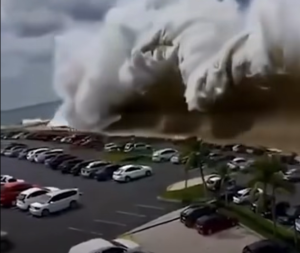
The image accompanying reports of the event appears to show a massive wall of water approaching a shoreline. However, it is important to note that dramatic images shared online during natural disasters are sometimes unrelated to the current event or may depict previous tsunamis or other coastal phenomena. Officials encourage the public to verify the source and context of widely circulated images before assuming they represent the ongoing situation.
As emergency operations continue, authorities remain focused on assessing coastal conditions, monitoring sea levels, and providing timely updates to affected communities. Teams are working around the clock to evaluate infrastructure, assist residents, and ensure that evacuation orders or advisories are adjusted as new information becomes available.
The situation also highlights the remarkable coordination between seismologists, meteorologists, emergency managers, law enforcement, healthcare providers, transportation officials, and local governments. Their combined efforts are designed to protect communities while minimizing confusion during rapidly evolving emergencies.
Although many tsunami alerts ultimately result in smaller-than-feared impacts, emergency officials consistently emphasize that every warning should be treated seriously until it is officially canceled. The unpredictable nature of earthquakes and tsunami generation means that caution remains the safest course of action.
For now, residents along Alaska’s southern coast are being urged to stay informed through official emergency channels, follow evacuation instructions if issued, avoid coastal areas until authorities declare them safe, and remain prepared for possible aftershocks as response efforts continue. The coming hours will be critical as scientists analyze incoming data, emergency crews complete damage assessments, and communities work together to ensure public safety in the aftermath of this powerful seismic event.